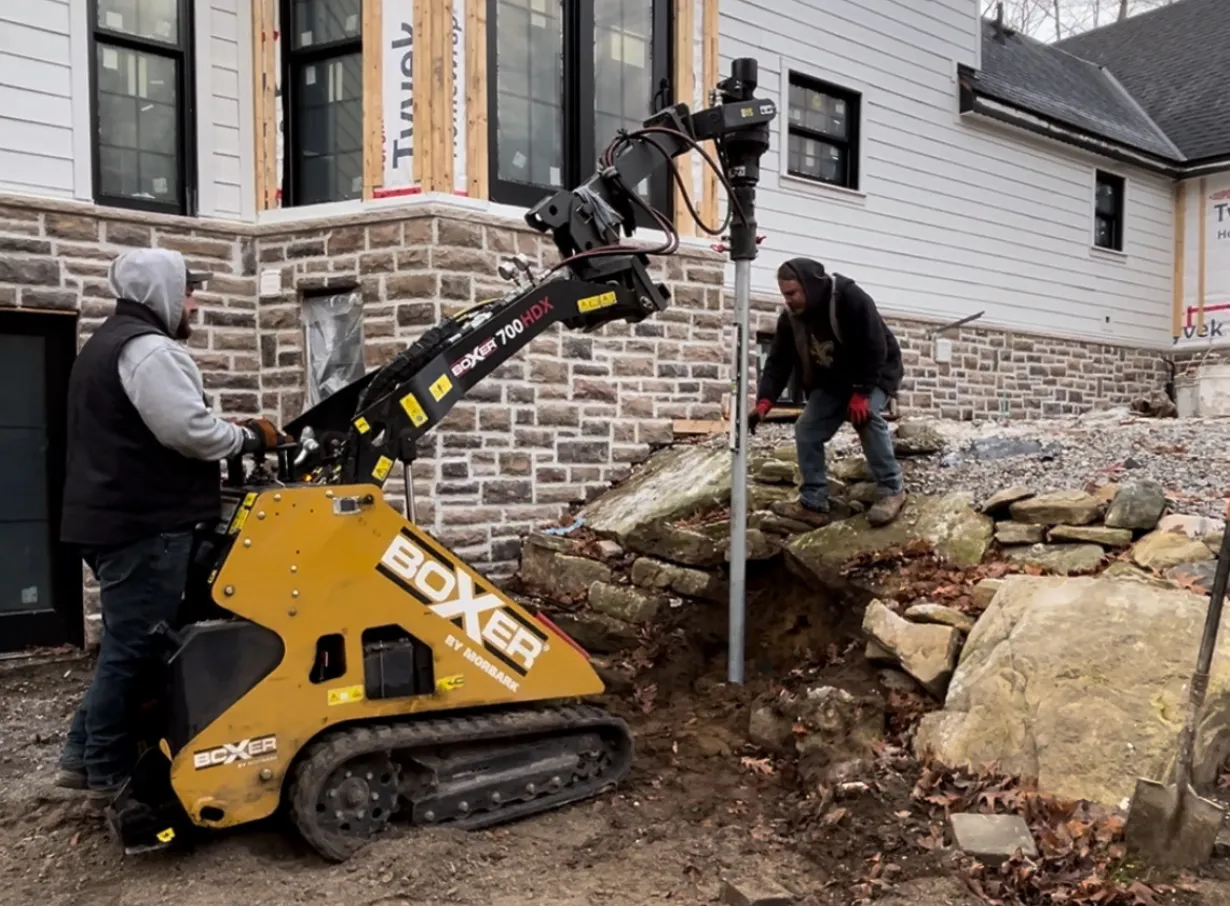
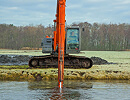
Diamond tech just installed piles for a deck off our sport court. Great service. Came right away to get them done. Their employees were very professional.
Residential Foundations
Commercial & Industrial
Nautical & Marine
Underpinning & Repairs
Parging covers exterior foundation walls to shield concrete block and poured footings from the elements. But when underlying soil shifts, the foundation wall flexes, causing rigid parging to crack, bulge, or pop off entirely. Patching mortar over a moving wall only covers up the problem temporarily. Our engineered helical piles anchor beneath your footings to stop ongoing wall movement, giving fresh parging a stable surface that won’t crack.
Base Stabilization
Holds the foundation wall steady so fresh mortar coats don’t pop off or fracture.
Long-Lasting Repair
Stops foundation settlement, avoiding repeated mortar repairs year after year.
Protection for Block Walls
Prevents small shifts in concrete block footings that force exterior parging to shear off.
Simple Site Prep
Compact rigs install piles quickly before your masonry crew applies new mortar.
Permit Ready
Includes full stamped engineered drawings for municipal structural underpinning permits.
Parging is a thin layer of mortar applied over concrete block or poured foundation walls. While it acts as a protective barrier against rain and snow, it offers no structural strength. When subsoil compresses or shifts under your footing, the foundation wall flexes. That tiny bit of wall movement puts immediate pressure on the rigid cement coating, causing wide diagonal cracks, crumbling sections, and flaking. Patching mortar over an unstable footing means the new parging will break open as soon as the ground moves again.
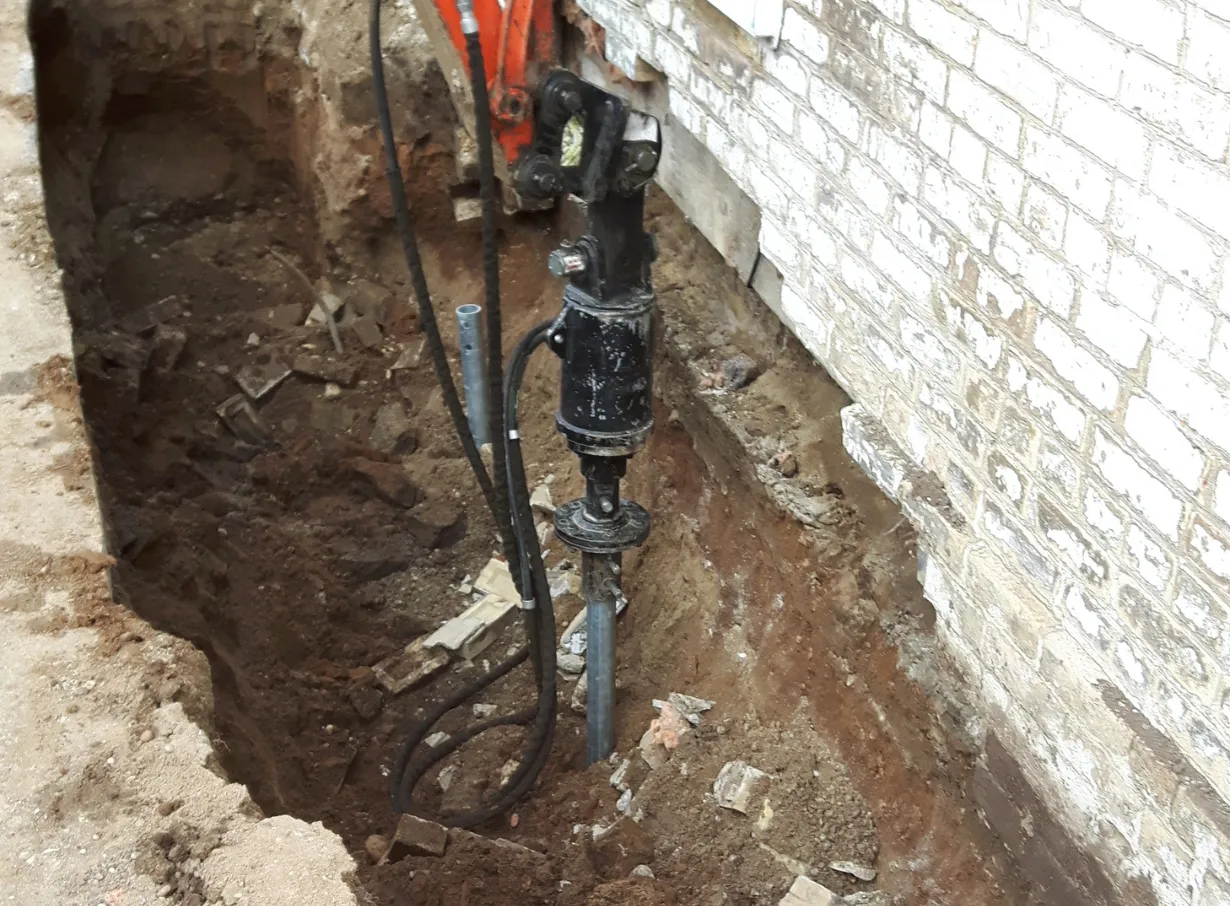
Re-applying parging without addressing foundation settlement leads to constant maintenance. We excavate small access points along the foundation wall to expose the bottom of the footing. Heavy-duty steel underpinning brackets are secured to the concrete, and helical piles are driven deep into firm, stable soil.
This locks the foundation in place and stops the ground movement that destroys mortar layers. Once the wall is held steady, masons can apply a clean, fresh parging coat knowing the wall beneath won’t shift.
We bring compact equipment and engineered underpinning solutions directly to your job site. Check our service map below or contact our team to confirm coverage for your address and book a structural site evaluation.
If parging cracks repeatedly in the same area, the foundation footing beneath the wall is likely settling or shifting. Mortar cannot flex, so any wall movement forces the parging to split open.
No. Hairline cracks caused by age or minor weather wear usually just need cosmetic mortar repairs. But if you see thick, deep cracks, flaking block mortar, or wall gaps alongside the parging cracks, the foundation needs structural support.
Always install helical piles first. Lifting or stabilizing the foundation wall can cause old, loose parging to crack or fall off during the process. Once the wall is locked in place, you can apply a clean coat of new mortar.
Yes. We mount specialized underpinning brackets beneath the concrete footing carrying the block wall. This supports the entire wall structure from underneath without damaging the sound sections of block.
Yes. Installing underpinning piles to stabilize a foundation wall requires a municipal building permit in Ontario. We provide stamped engineered shop drawings and a final letter of conformity for inspector sign-off.
Planning a temporary or relocatable structure? Read our guide to removable and reusable helical piles for temporary foundations.