Which Foundation Cracks are Structural and Which Are Not?
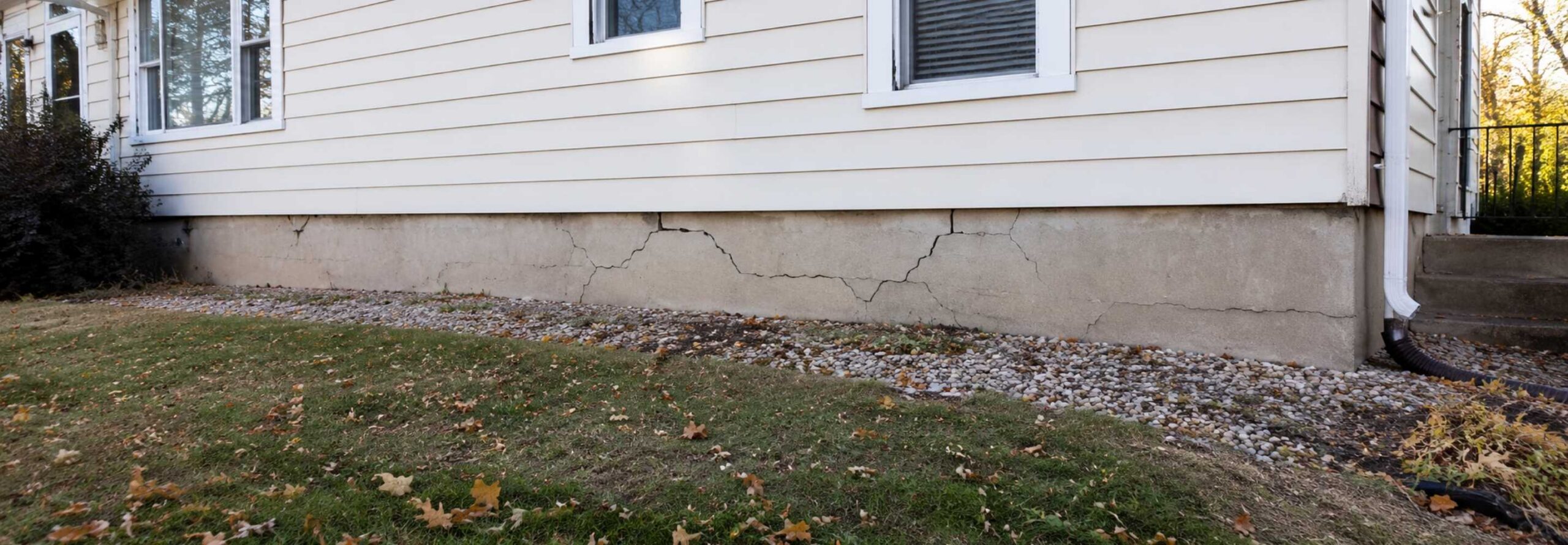
Not every crack means the house is moving. Most concrete cracks in the first couple of years are shrinkage from curing, and they stay hairline and stay put. The ones that matter are the ones that keep getting wider, run on a diagonal or a stair-step through block, or come with doors that stop closing and floors that start sloping. That pattern is settlement, and injection will not fix it, because the crack is a symptom of the footing moving, not the problem itself.
| Crack type |
Usual cause |
Typical fix |
| Hairline vertical |
Concrete curing and shrinkage |
Monitor, or epoxy / polyurethane injection if it leaks |
| Widening or stair-step |
Foundation settlement |
Helical pile underpinning to stop the movement |
| Horizontal or bowing wall |
Lateral soil pressure |
Engineering review; bracing or piles |
Foundation Crack Repair Methods and What Each One Actually Fixes
There are four common repairs, and they solve four different problems. Matching the repair to the cause is the whole job; the wrong one looks fine for a season and then fails.
Epoxy injection
Solves: a non-moving crack in poured concrete that needs to be bonded back together. Epoxy is a structural adhesive; injected under pressure it welds the two faces of the crack and restores the wall’s continuity. It does nothing about why the crack formed, so on a footing that is still settling it simply cracks again beside the repair. Right for shrinkage cracks and old, stable cracks that need to be closed and sealed.
Polyurethane injection
Solves: water coming through a crack. Polyurethane foam expands and stays flexible, so it stops leaks and tolerates a little seasonal movement. It is not structural. Right for a leaking hairline or vertical crack in a wall that is otherwise sound.
Carbon-fibre straps
Solves: a wall that is bowing inward from lateral soil pressure but has not moved far. Straps are bonded to the inside face of the wall to stop further inward movement. They do not lift or straighten anything and they do not address settlement of the footing. Right for early-stage bowing, usually after an engineer has measured it; beyond a certain deflection the wall needs bracing or rebuilding instead.
Helical pile underpinning
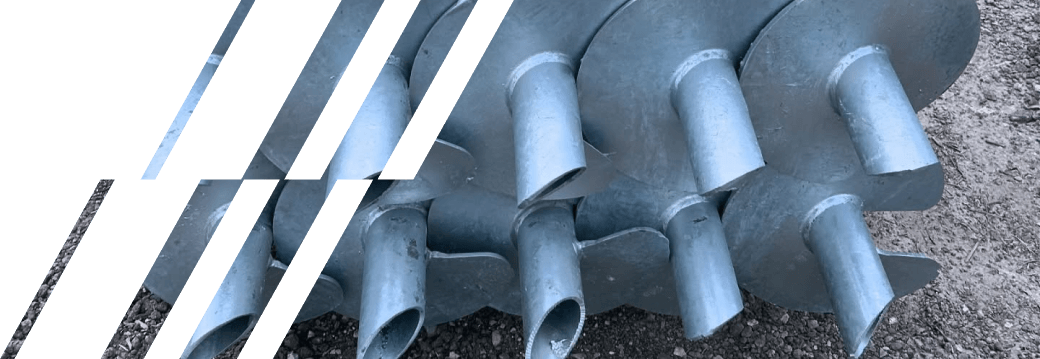
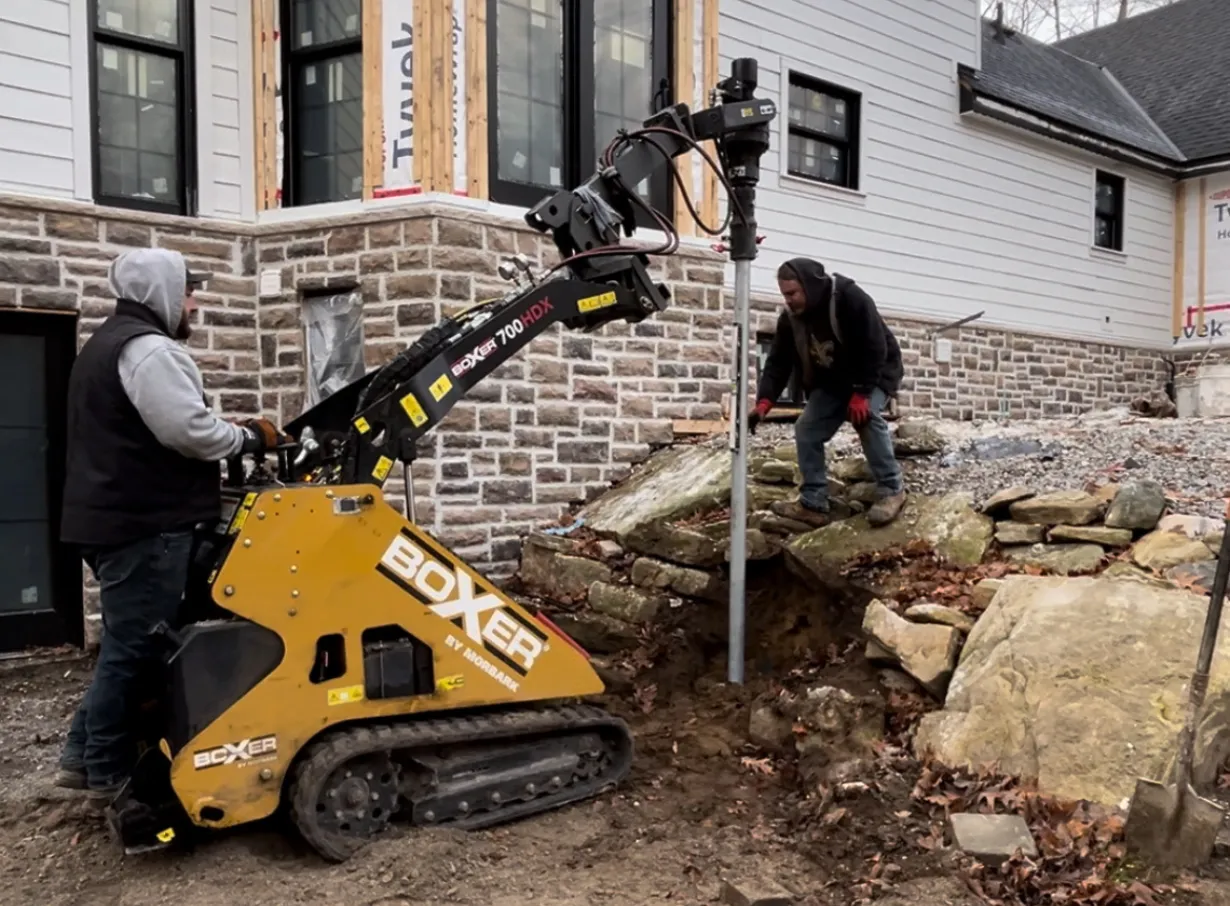
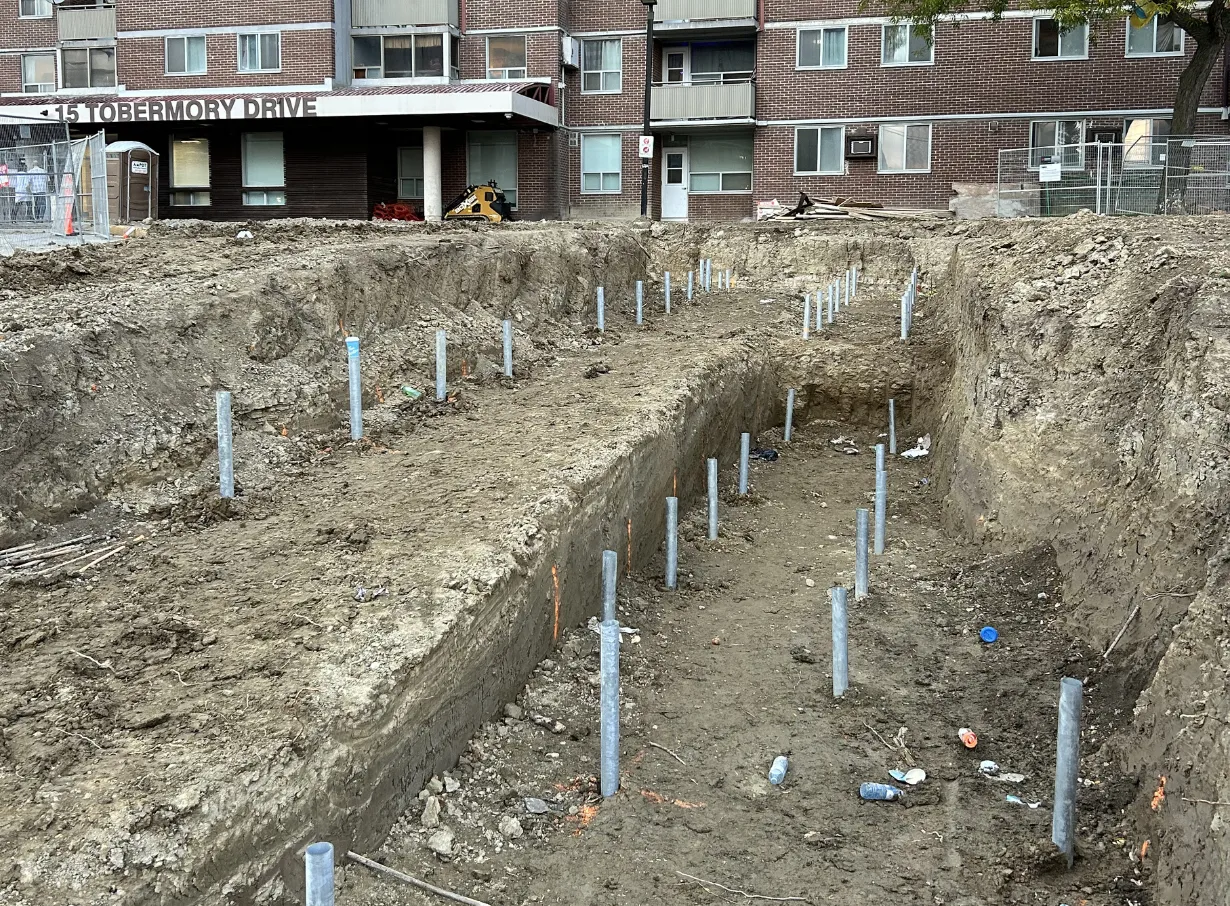
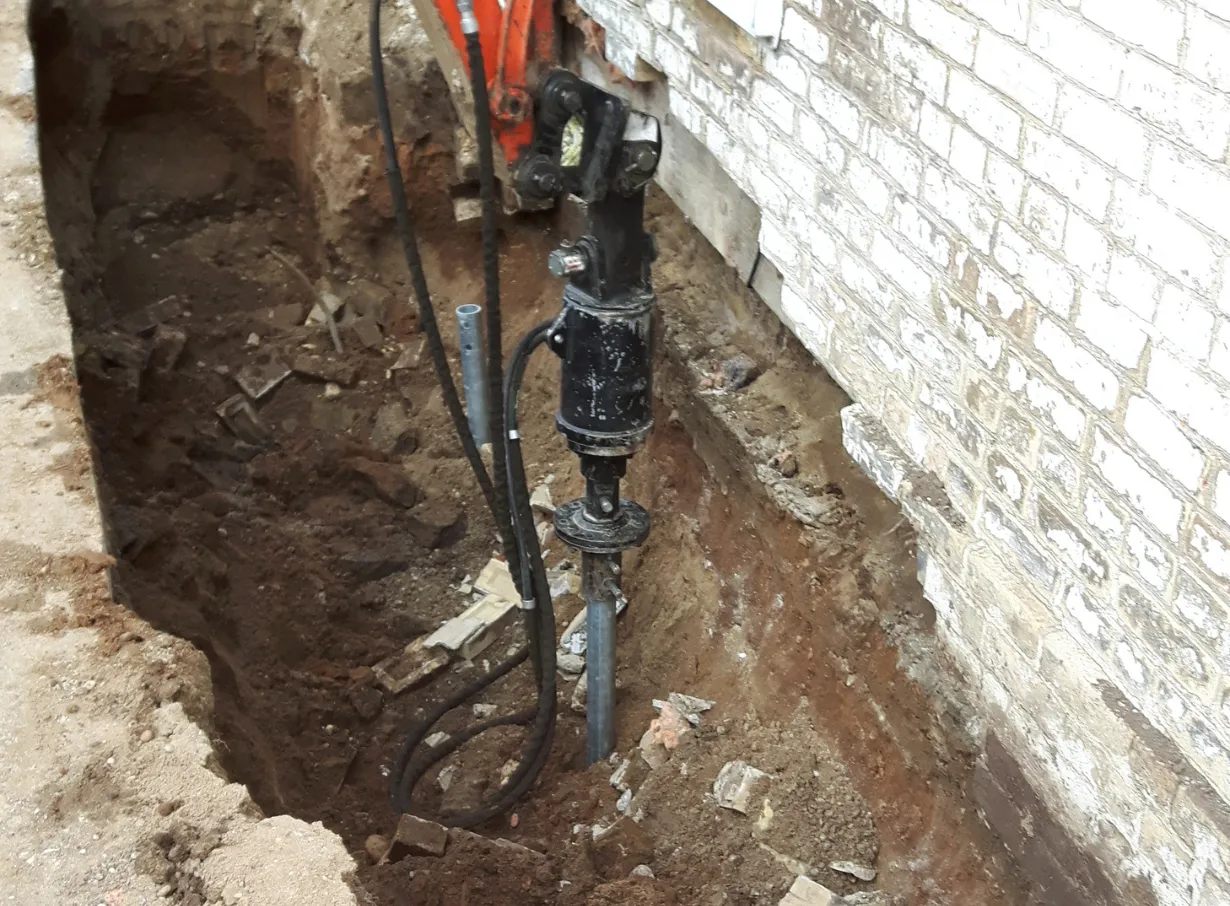
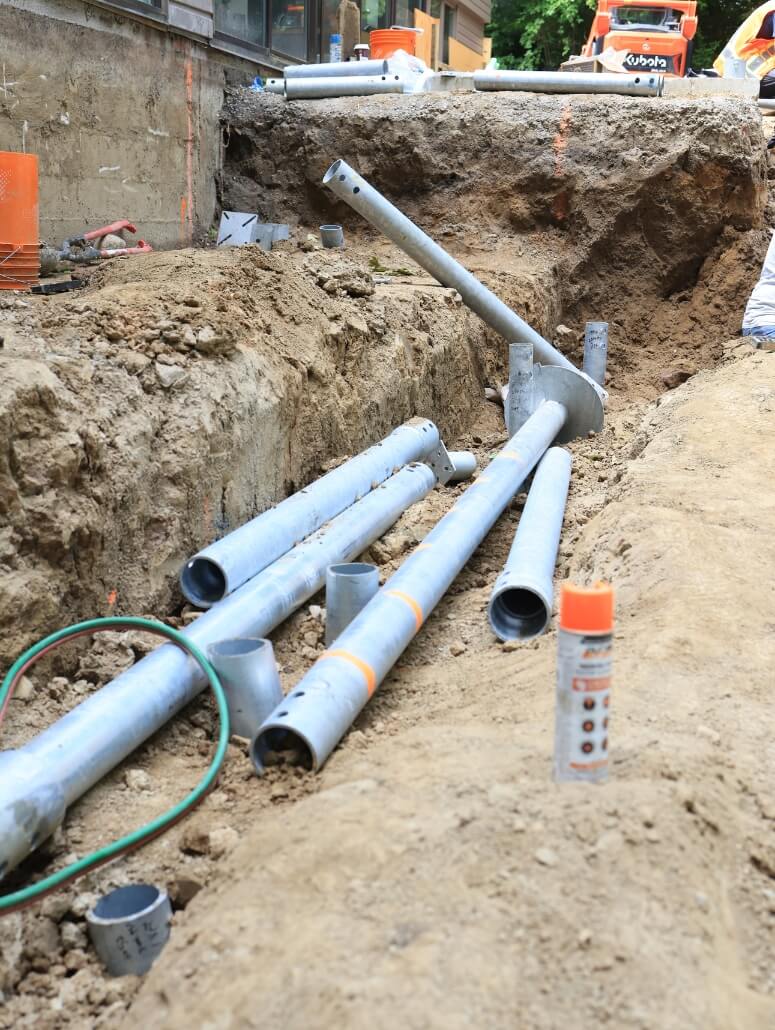
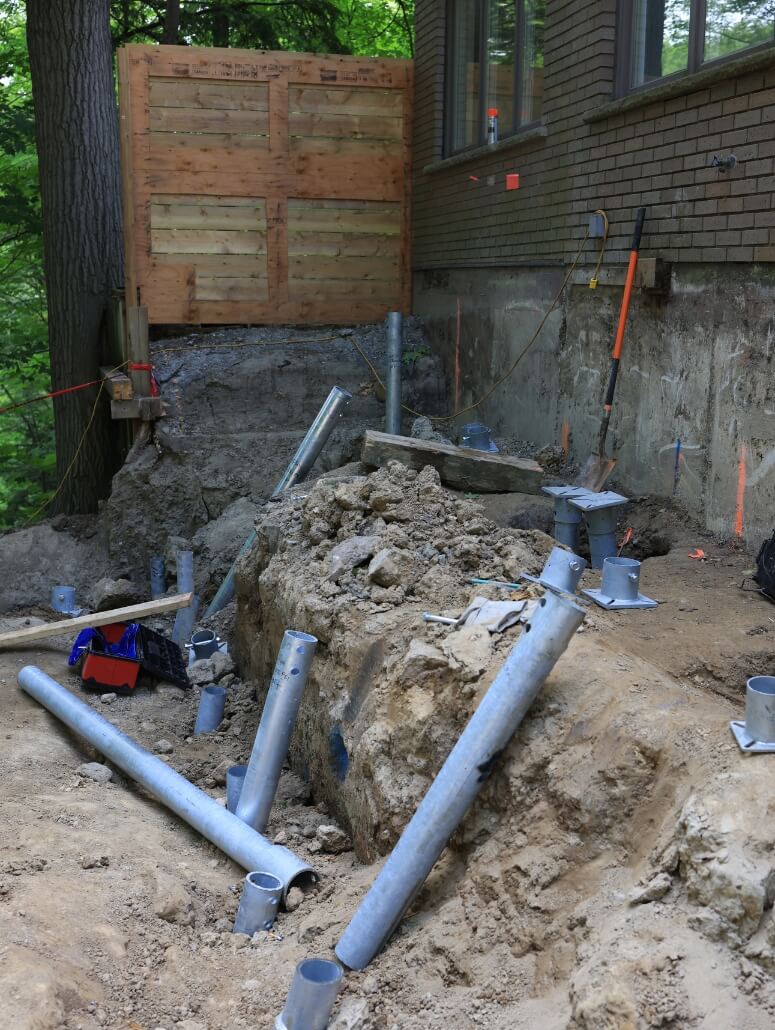
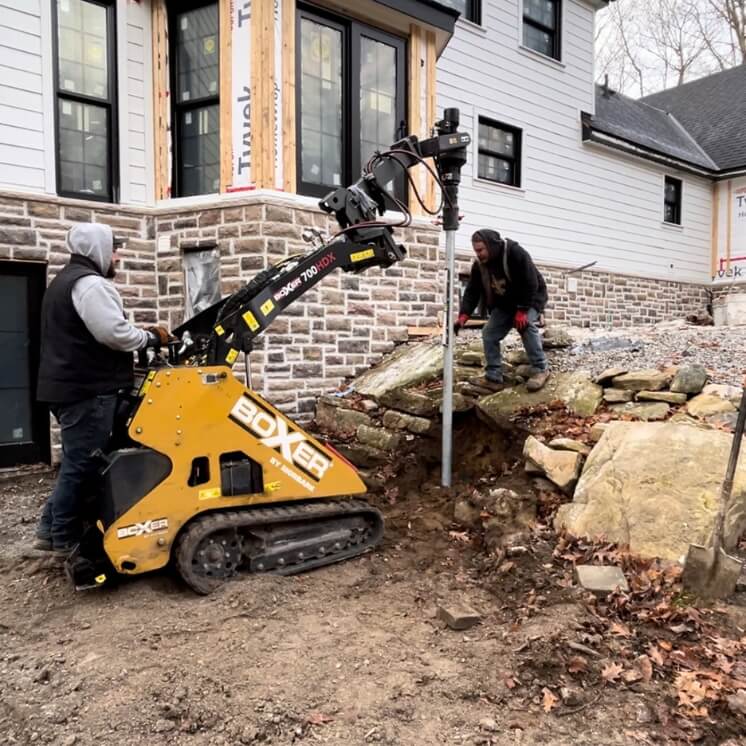
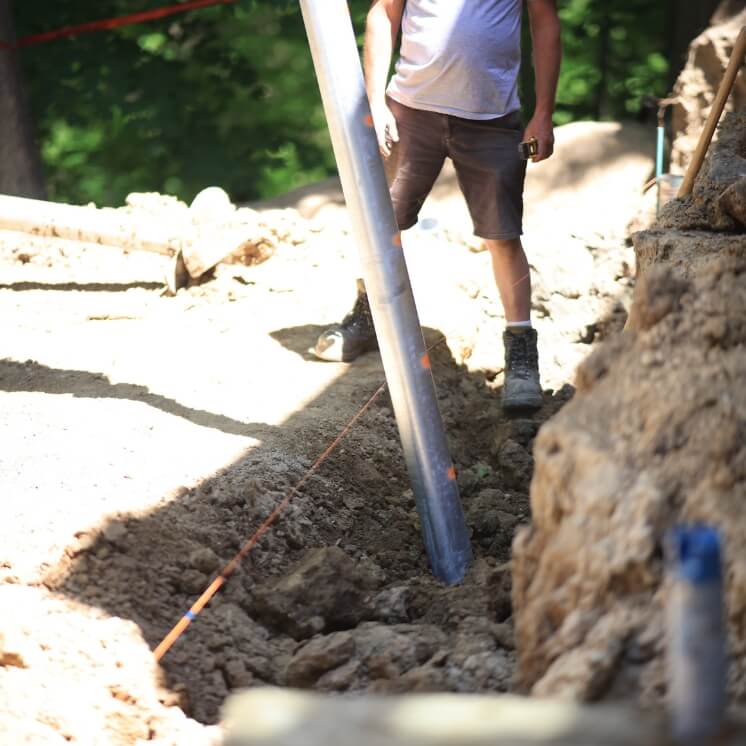
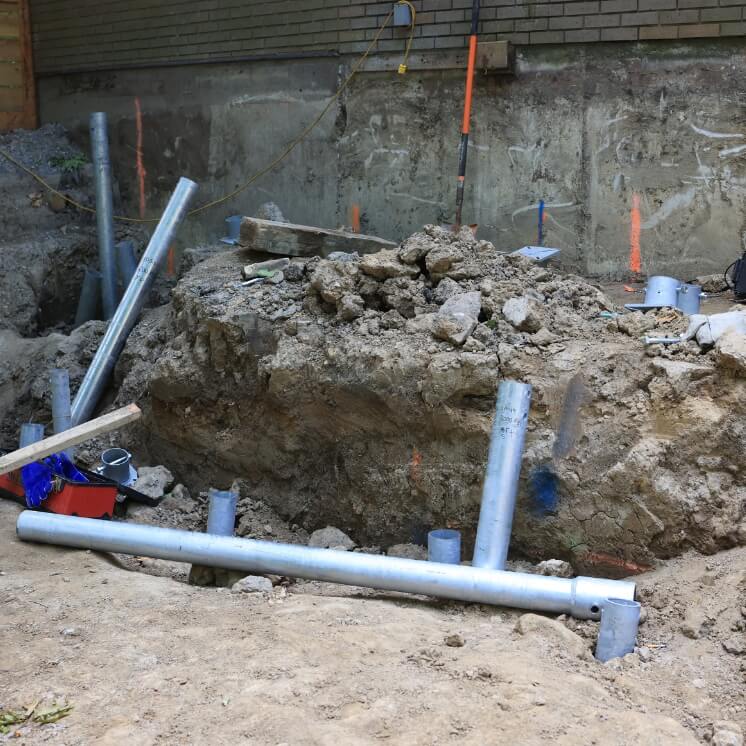
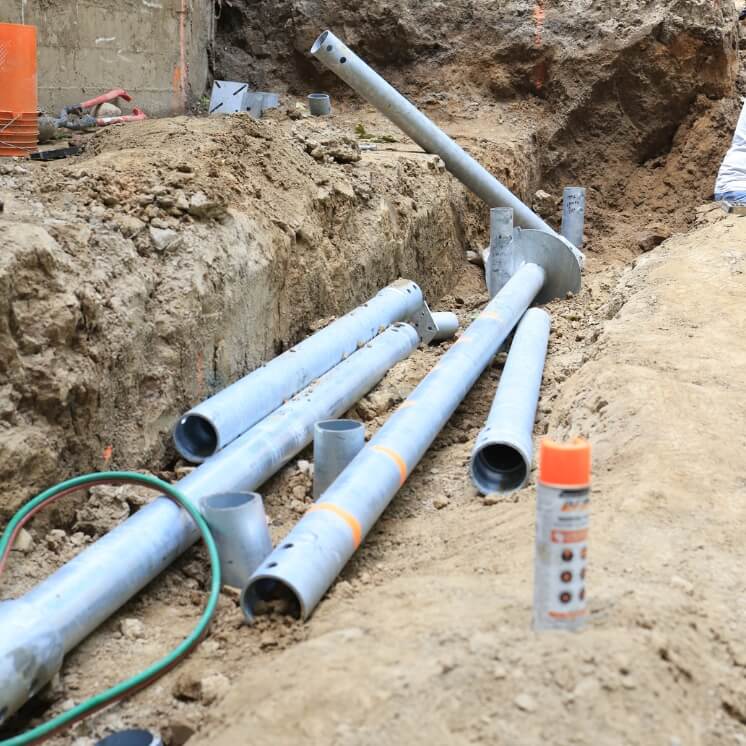
Solves: settlement. When the crack is widening, stair-stepping, or showing up with sloping floors and sticking doors, the footing is sinking and no surface repair will hold. Helical piles are turned into competent soil beside the footing, brackets transfer the load onto them, and with synchronized hydraulic lifting the foundation can often be brought back toward level, closing the crack from the inside out. This is what we do. Once the movement is stopped, the crack itself can be sealed by injection and it stays sealed.
What we do and do not treat
Our work is the underpinning: stopping settlement and lifting where the engineering allows it. We do not inject cracks, bond carbon-fibre straps or apply waterproofing membranes ourselves; those are done by crack-repair and basement waterproofing contractors, and we regularly work alongside them on the same job, underpinning the wall first so their repair is not torn open by movement later. If your crack is a stable hairline that only leaks, call a crack injection or waterproofing contractor and skip us. If a wall is bowing, call a structural engineer first, because the fix depends on how far it has moved. If the crack is growing or the house is out of level, call us and we will tell you whether underpinning is the answer.
What actually causes settlement
Four things account for most of what we get called out to in Ontario. Clay that shrinks in a dry summer and swells again in the fall. Poorly compacted fill under an addition or a porch that was added later. Water, from a downspout, a grade that slopes back at the house, or a leaking service, washing fines out from under the footing. And footings that were never deep enough to clear frost in the first place.
When underpinning is the answer instead of injection
Injection seals a crack. It does nothing about the soil under the footing. If the crack is still growing, if it is wider at one end than the other, or if the movement shows up in more than one place in the house, the load has to be transferred onto ground that is not moving. That is what underpinning does: helical piles are installed beside the footing, brackets tie into it, and the load goes down to competent soil below.
Seal it first and you will usually be back a year later watching the same crack reopen. Stop the movement first, then close the crack.