

Published October 27, 2026. Last updated .
Low soil bearing capacity means the ground under a site cannot reliably support the load placed on it without excessive settling, shifting, or long-term movement, and on a surprising number of Ontario sites, that is exactly what a soil report turns up. If a build has already started moving unevenly, or a report has come back flagging this, the practical question is what happens next, not just what the term means. Start with what a soil report actually tells you if one has not already been done.
This is written for the person staring at a report, a cracked slab, or a contractor’s comment about soft ground, trying to understand what low bearing capacity actually changes about a project and what the realistic next steps look like.
What low soil bearing capacity actually means on a site
Bearing capacity describes how much load a given soil can carry before it compresses or shifts more than a structure can tolerate. Dense sand and well-compacted gravel generally offer more resistance to that kind of movement, while soft clay, loose fill, peat and saturated soils typically offer less. None of this is fixed across a whole neighbourhood either. Bearing capacity can vary meaningfully from one side of a lot to the other, which is part of why a single soil sample rarely tells the whole story.
What happens when a construction site has low soil bearing capacity
When a structure sits on soil that cannot adequately support its load, the ground beneath it tends to compress unevenly rather than uniformly. That uneven settlement is what shows up later as sloped floors, cracked drywall near corners, doors that begin sticking, or a section of foundation that has visibly dropped relative to the rest of the structure. On a new build, low bearing capacity discovered before construction changes the foundation design conversation early, which is generally far less disruptive than discovering it after the structure is already standing.
On an existing property, the same underlying issue tends to show up as slow, ongoing movement rather than a single dramatic event. That pattern is exactly what makes low soil bearing capacity easy to mistake for ordinary settling in the first year or two, before the difference between normal and abnormal movement becomes obvious.
Red flag
Cracks wider than a pencil, a door or window frame that has visibly racked out of square, or a foundation corner that keeps dropping year over year are not wait-and-see signs. Get a geotechnical assessment before deciding on any repair, since treating the symptom without addressing the soil underneath it tends to bring the same problem back.
Symptom to likely cause: a quick diagnostic table
None of these symptoms confirm low bearing capacity on their own. What they do is point toward where to look first, and what kind of assessment is likely to confirm or rule it out.
| What you notice | What it commonly points to | Where it’s typically confirmed |
|---|---|---|
| A slab or floor with a new, gradual slope | Uneven settlement where bearing capacity varies across the site | A geotechnical soil report paired with a level survey |
| Cracks appearing at door and window corners | Differential settlement pulling the structure unevenly | A structural or geotechnical assessment |
| One section of foundation sitting lower than the rest | Soft or compressible soil under just that section | Soil borings taken across the footprint, not one single spot |
| New construction settling faster than expected | Bearing capacity lower on site than assumed at design stage | Comparing as-built conditions against the original soil report |
| Standing water or soft ground near the foundation after rain | Drainage issues compounding an already low bearing capacity | A combined grading, drainage and soil review |
People often ask
People often ask whether low bearing capacity means the whole lot is unbuildable. Almost never. It generally means the foundation design needs to account for what the soil can actually support, which is a design question an engineer works through, not a reason to abandon a project.
How foundations are typically adapted for low bearing capacity
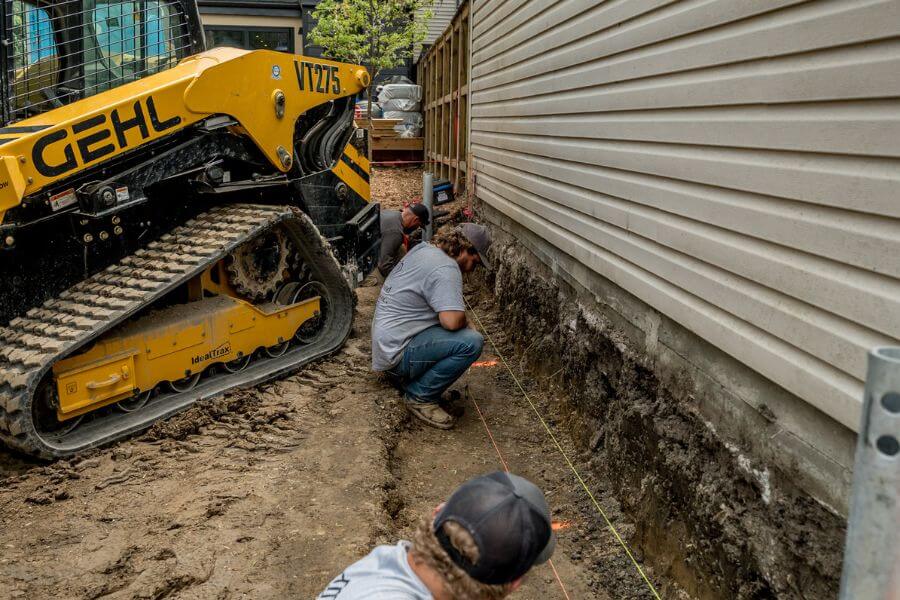
The general engineering principle behind most fixes is the same: reach soil that can actually carry the load, either by spreading the load over a wider area or by carrying it down to a more capable layer. On commercial and industrial sites, projects with heavier or concentrated loads often need this conversation earliest, since equipment pads and warehouse expansions load the soil differently than a typical residential footprint.
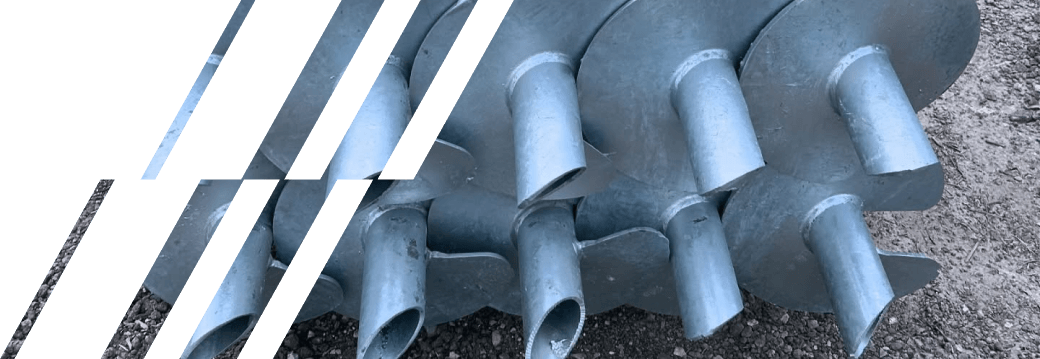
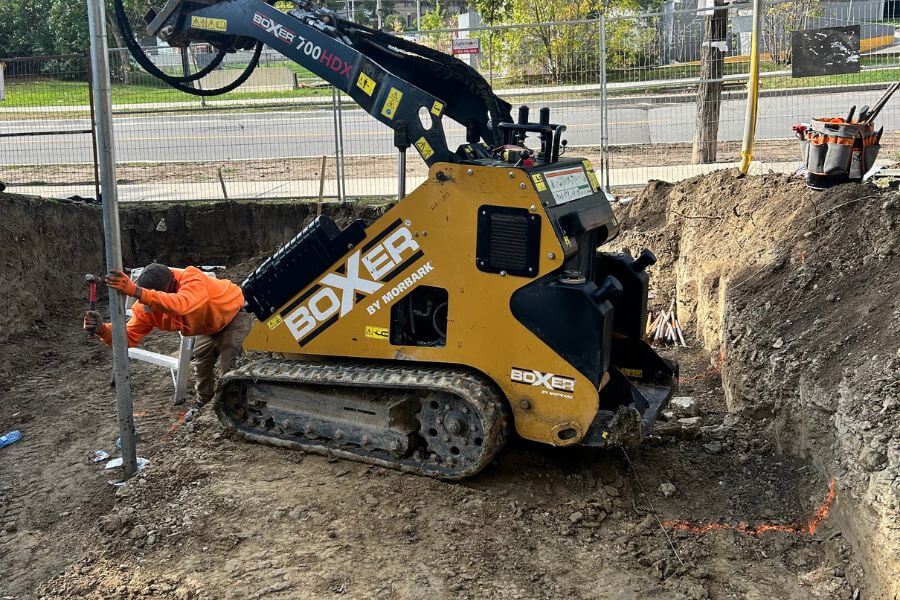
One common approach is carrying the structure’s load down on helical piles to soil the engineer has assessed as suitable, bypassing the weaker layer near the surface rather than trying to strengthen it in place. Where a structure already exists and has settled, a similar principle applies through underpinning to stabilize cracked or shifting foundations, which reaches past the compromised soil rather than patching the visible symptom. The right approach for a given site depends on soil conditions, structure type and load, which is exactly what a licensed professional engineer reviews before any foundation design is finalized.
Good to know
This article explains general concepts, not an assessment of your specific site or structure. Whether a site has low bearing capacity, and what that means for a given foundation, can only be confirmed through a geotechnical soil report and review by a licensed professional engineer. Do not use general information like this in place of a site-specific assessment.
Download the free quick guide
A printable worksheet for logging what you are seeing, where, and the questions worth bringing to a geotechnical assessment.
Frequently asked questions
How is low soil bearing capacity actually confirmed on a site?
Through a geotechnical soil report, which typically involves borings or test pits taken at more than one point across the footprint, since bearing capacity can vary meaningfully within a single lot. The report describes the soil layers present and how they are expected to behave under load, which an engineer then uses to guide the foundation design. A single visual inspection or a comment from a contractor is not the same as a soil report, and should not be treated as a substitute for one.
Can a site with low bearing capacity still be built on?
In the large majority of cases, yes. Low bearing capacity generally changes the foundation approach rather than ruling out construction altogether. Foundations that carry load down to a more capable soil layer, or spread it over a wider area, are common responses on sites like this. The specific approach depends on the soil report, the structure’s load, and site access, which is why this is a design question for an engineer rather than a fixed rule.
Does low soil bearing capacity affect renovations and additions, not just new builds?
Yes, and it is sometimes missed on additions specifically, since the existing structure may already be performing fine on its original foundation. Adding load, such as a second storey or a large addition, changes the demand on the soil beneath the new portion, which is why a soil assessment is worth revisiting for additions rather than assuming the original conditions still apply.
Is settling in a new build always a sign of low bearing capacity?
Not always. A small amount of settling is common in the first year or two after construction on most soils, and it is not automatically abnormal. What points more specifically toward a bearing capacity issue is settlement that is uneven across the structure, that continues well beyond the typical early settling period, or that shows up alongside cracking and door or window misalignment. A professional assessment is the reliable way to tell the two apart.
What does a soil report typically cost and how long does it take?
Cost and timeline vary by site size, access and how many test points are needed, so we avoid quoting a fixed number here. What matters more than the price is getting a report that actually covers your specific footprint rather than a single generic sample. Ask a geotechnical firm for a written scope before booking, so you know what the report will and will not cover.
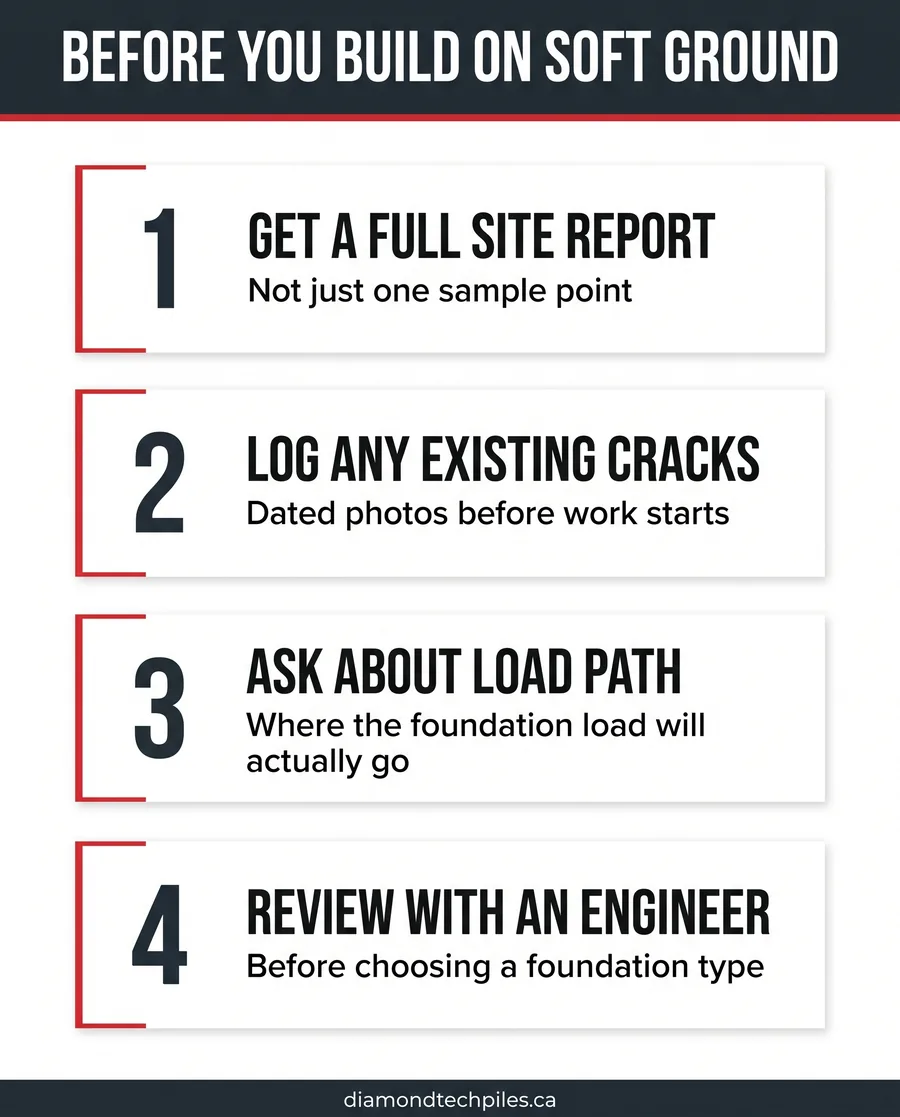
If a soil report, a contractor’s comment, or visible movement has you wondering about bearing capacity on your site, here is a reasonable next sequence:
- Get a geotechnical soil report if one has not already been done, covering more than a single sample point across the footprint.
- Log any visible movement with dated photos, especially at corners, door frames and slab joints.
- Bring both the report and your notes to a licensed professional engineer before choosing a foundation approach.
DiamondTech Piles works on both new builds and existing structures across our service area around Barrie where low bearing capacity soil is a routine part of the conversation. Talk to our crew once you have a report in hand, and we can walk through what a load-appropriate foundation would look like for your site.