

Published October 16, 2026. Last updated .
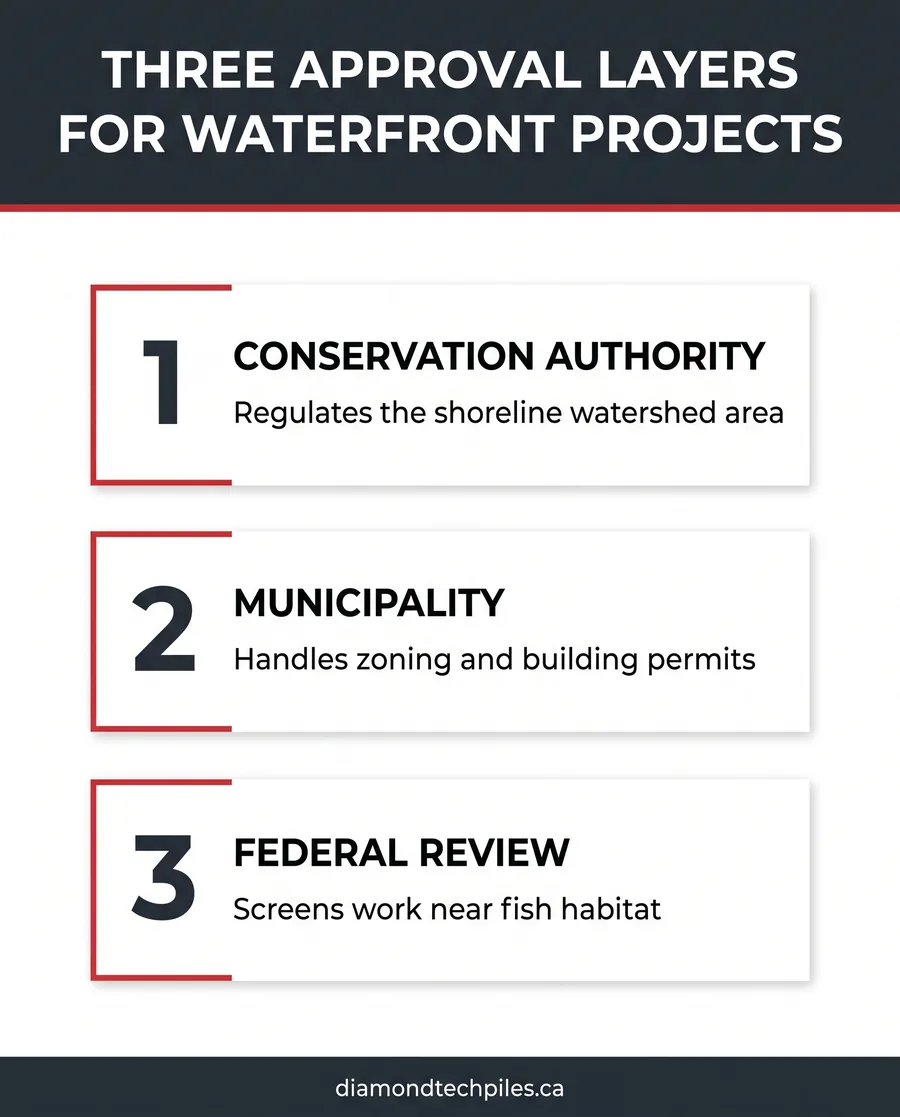
Ontario’s shoreline is not managed by one office. It runs through Conservation Ontario, the umbrella body for Ontario’s 36 Conservation Authorities, plus the municipality the property sits in, plus, depending on the project, a federal review of anything that touches fish habitat. As of August 2026, anyone asking what waterfront construction permits in Ontario actually involve is really asking about three separate approval layers, not one form. Planning nautical or marine foundation work on your own shoreline starts with understanding which of those layers applies to your project.
None of this is a legal opinion, and it should not replace one. It is a plain-language walk-through of how the process commonly unfolds in practice, so you know what to expect and who to call first.
How many layers waterfront construction permits in Ontario usually involve
Start with the local layer. Every Conservation Authority sets its own regulated area around rivers, lakes and wetlands, and shoreline work inside that area commonly needs its own permit from that authority, separate from anything the municipality issues. the Toronto and Region Conservation Authority is one example of the roughly three dozen authorities that each cover their own watershed, which is part of why waterfront construction permits in Ontario look different depending on which lake or river the property sits on.
Layer two is the municipality itself. Building permits, zoning compliance and setback questions generally sit with the local building department, following the broader planning framework described in Ontario’s citizen’s guide to land use planning. A property can be fully compliant at the Conservation Authority level and still need a separate municipal building permit before any structure goes in.
Layer three is federal, and it applies specifically to work that could affect fish habitat, which includes most work at or below the water line. Fisheries and Oceans Canada’s Projects Near Water program is the current self-assessment tool, as of August 2026, for figuring out whether a specific project needs federal review, and it is worth checking even for projects that already have local approval.
Did you know
Conservation Ontario represents Ontario’s 36 Conservation Authorities as of this writing, each managing its own watershed and its own permitting process. That is one reason a neighbour’s experience on a different lake is not always a reliable guide to what your own application will involve.
The typical order approvals get worked through
In practice, most owners work through these steps roughly in this order, though a specific municipality or authority can vary the sequence:
- Confirm the regulated area. Contact the Conservation Authority for the watershed the property is in and ask whether the planned work falls inside its regulated shoreline area.
- Talk to the municipal building department early. Zoning, setbacks and building permit requirements are handled separately from the Conservation Authority review, and starting both conversations at once tends to save time later.
- Run the project through the federal self-assessment tool. Work at or below the water line is commonly screened for potential effects on fish habitat before construction begins.
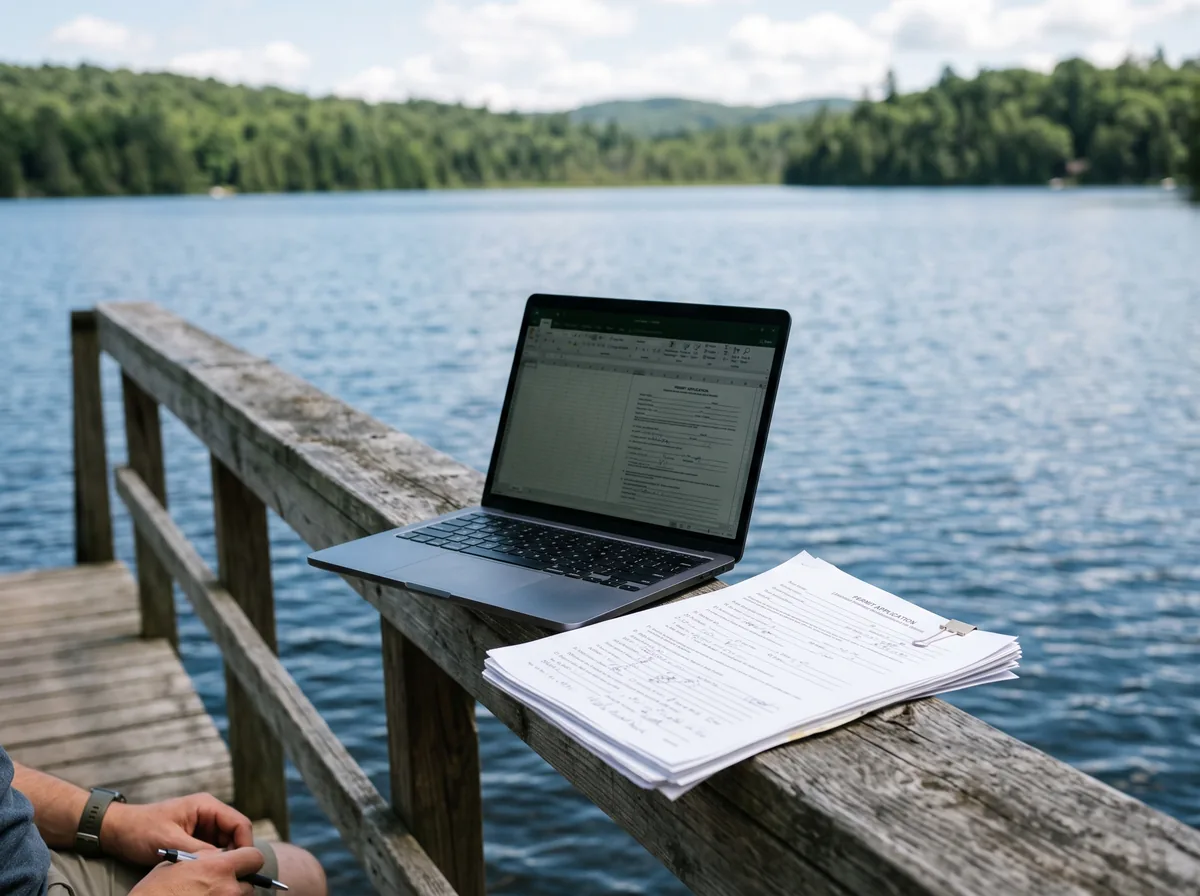
- Submit supporting documents. Site plans, a description of the proposed work and, for many foundation projects, a geotechnical soil report are commonly requested at this stage.
- Wait for written approval before starting. Verbal guidance from any office is not the same as a signed permit, and starting work before approvals are in hand is one of the more common and avoidable problems we see.
What a Conservation Authority application commonly asks for
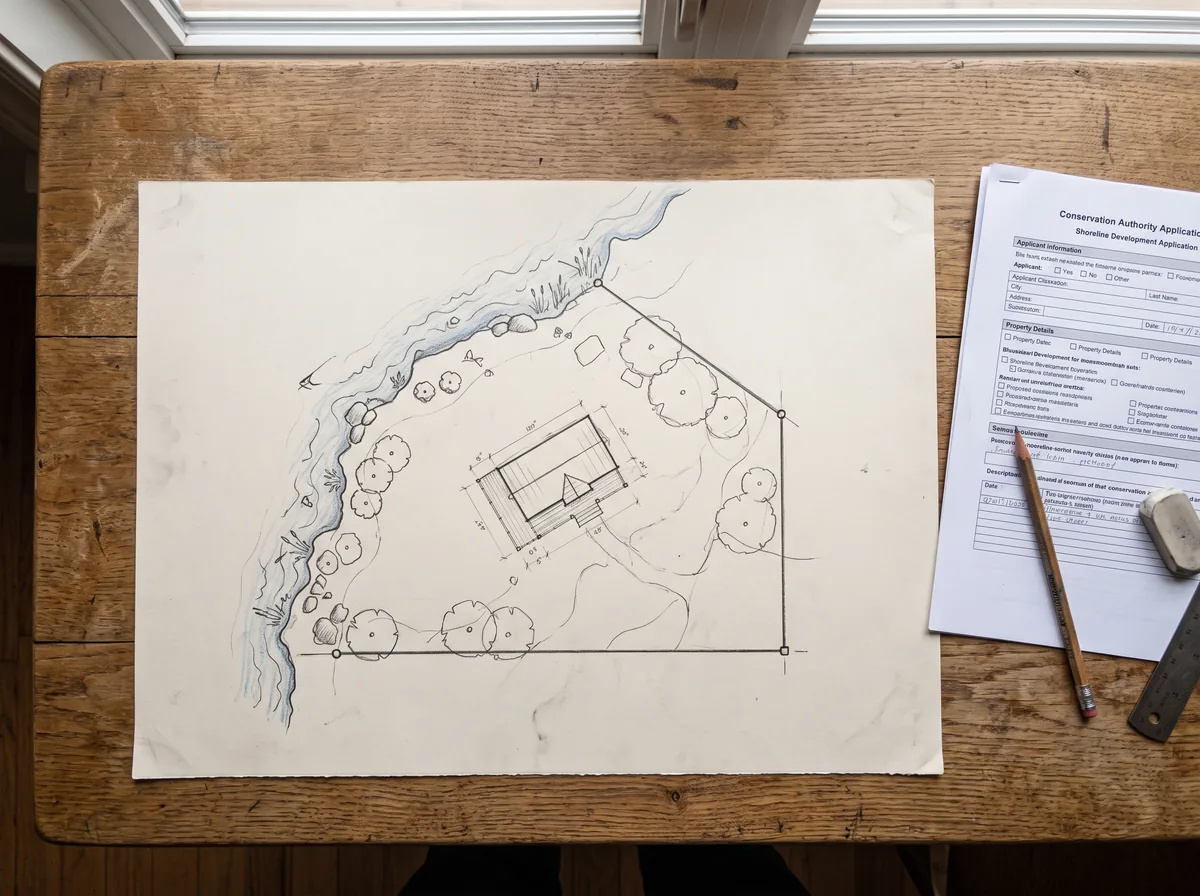
Requirements vary by authority, but as of August 2026 most applications commonly ask for a site plan showing the shoreline, the existing structure if any, and the proposed work; a written description of what is being built and why; and, for anything involving a new or replacement foundation, an engineer-reviewed foundation plan. Larger or more sensitive shorelines sometimes also involve an environmental review, particularly where wetlands or fish spawning areas are nearby.
Foundation-specific detail matters here more than people expect. A generic description of the piling approach a project intends to use tends to move through review faster than a vague one, since reviewers are generally trying to understand how much the shoreline itself will be disturbed during construction, not just what the finished structure will look like.
What commonly slows an application down
A few patterns come up repeatedly, and most are avoidable with some planning before you submit anything.
- Submitting to only one layer. An application that only goes to the municipality, without checking the Conservation Authority and federal layers, often has to be resubmitted once the gap is caught.
- Vague site plans. A hand-drawn sketch without measurements or clear shoreline reference points tends to generate follow-up questions rather than an approval.
- Starting work early. Any grading, excavation or pile installation that begins before written approval is in hand can complicate the whole file, sometimes for the whole property, not just the new work.
- Seasonal timing. Some authorities restrict certain in-water work to specific windows tied to fish spawning periods, which can push a project’s start date later than expected if it is not planned for in advance.
Red flag
Starting shoreline work without written approval from every applicable layer is not a shortcut, it is a common way to end up with a stop-work order partway through a project. If you are not sure which approvals apply to your property, ask the Conservation Authority for your watershed before booking any contractor.
Good to know
This overview reflects how the waterfront permitting process commonly works in Ontario as of August 2026, in general terms. It is not legal advice, and it is not a substitute for confirming requirements directly with your local Conservation Authority, your municipal building department and, where relevant, Fisheries and Oceans Canada. Requirements, boundaries and review windows change and vary by watershed and municipality.
Download the free quick guide
A printable worksheet for tracking which office you have contacted, what they asked for, and what is still outstanding across all three approval layers.
Frequently asked questions
Do I need a permit for a small dock repair, or only for new construction?
It depends on the scope of the work and the specific Conservation Authority, so there is no blanket answer that covers every repair. Minor, like-for-like maintenance is sometimes treated differently from a repair that changes the footprint, height or foundation of an existing structure. The safest approach is to describe the planned repair to your Conservation Authority before starting, since assuming a repair is exempt is one of the more common mistakes we see waterfront owners make.
How long does the waterfront permitting process usually take?
Timelines vary by authority, by season and by how complete the initial application is, so we avoid quoting a fixed number here. Applications submitted with a clear site plan and complete supporting documents generally move faster than incomplete ones, and some in-water work is also restricted to specific seasonal windows. Ask the Conservation Authority for your watershed about current processing expectations as of the time you apply, since they change.
Can I start a waterfront project while an application is still under review?
Generally not, and doing so is one of the more common ways a project runs into problems. Written approval, not a verbal conversation or a submitted application, is what confirms a project can proceed. Starting grading, excavation or pile installation before that approval is in hand can complicate the review for the whole property, not just the new structure.
Does a Conservation Authority permit replace the need for a municipal building permit?
No, they are generally separate approvals from separate offices, and having one does not substitute for the other. A project can clear Conservation Authority review and still need its own municipal building permit before construction starts, and vice versa. Confirming both requirements early, rather than assuming one covers the other, is part of what keeps a waterfront project on schedule.
Who do I contact first if I am not sure which approvals my waterfront project needs?
Start with the Conservation Authority for the watershed your property sits in, since they can typically point you toward the municipal and federal layers that also apply to your specific shoreline. Bringing a clear description of the planned work, including the foundation approach, is generally what moves waterfront construction permits in Ontario forward fastest, rather than a general question about the property.
The honest verdict on waterfront construction permits in Ontario is that there is no single office that clears a project start to finish. As of August 2026, the workable approach is the same one that saves the most time: confirm your Conservation Authority’s regulated area first, loop in the municipality early, and check the federal self-assessment tool before anything touches the water line.
DiamondTech Piles works with waterfront owners across cottage country around Bracebridge and our wider service area, and we regularly coordinate foundation plans with the documentation a Conservation Authority asks for. Talk to our crew before you submit an application, and we can tell you what a foundation-ready site plan should include.