
Ontario has a massive, diverse landscape, which means the ground under our feet changes completely depending on where we stand. Down in the southern regions, we often find ourselves dealing with heavy, dense clay that reacts aggressively to changing weather. Up north, the rugged Canadian Shield gives way to wet, organic areas full of muskeg and loose sand. Anyone planning a construction project quickly realizes that standard concrete basements or shallow footings can struggle in these environments. Placing a heavy structure on ground that shifts naturally results in cracked foundation walls, slanting floors, and long-term structural headaches. We believe looking closely at why our local ground poses these obstacles helps clarify the steps needed to protect our investments. Choosing a deep foundation method tailored to the specific environment keeps a building stable regardless of seasonal shifts.
Understanding the Diverse Challenges of Building on Ontario Soil
Our province features distinct geological zones that complicate traditional construction planning. Soil behaviour depends heavily on water content and temperature changes throughout the year. For instance, clay absorbs water readily, causing it to swell significantly during wet spring months and shrink during summer droughts. This continuous movement places intense pressure on concrete walls, which often leads to structural cracking over time. Further north, high water tables combine with organic peat to offer almost no load-bearing support for heavy loads. Structures placed directly on top of these soft layers tend to sink or tilt without a solid anchor reaching deep underground.
Frost Heaving and the Annual Freeze-Thaw Cycle
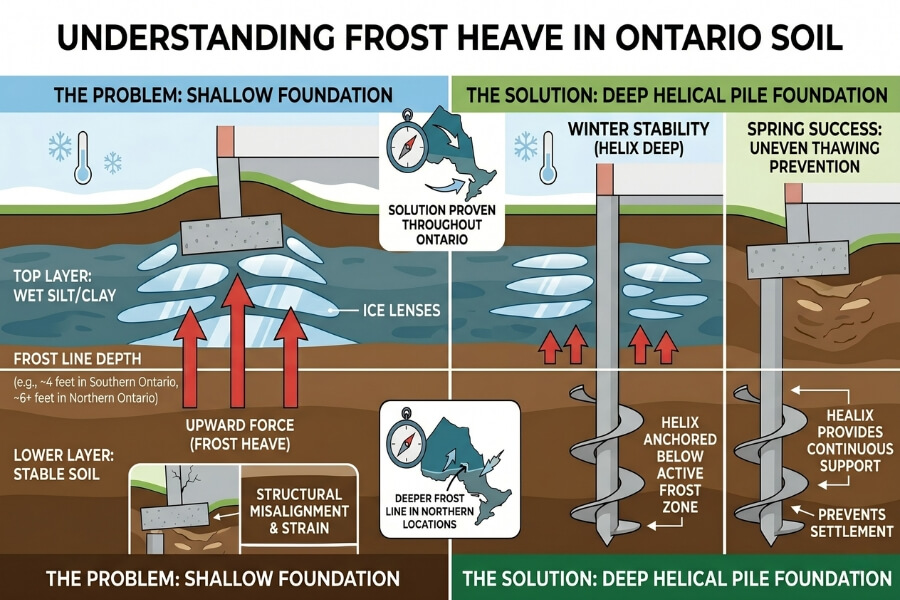
Cold weather introduces another serious obstacle for projects involving building on Ontario soil. As temperatures drop, moisture trapped within the upper ground layers freezes into ice, expanding its volume by roughly nine per cent. This expansion pushes upward with incredible force, a natural phenomenon called frost heave. Standard shallow concrete columns frequently get gripped by frozen earth and lifted out of position. Once the spring warmth arrives, the ground thaws unevenly, leaving the structure misaligned and strained. Overcoming this requires a foundation that reaches well past the local frost line, which can range anywhere from four to over six feet deep depending on how far north the site is located.
- Frost Depth Adjustments: Southern properties typically need a four-foot depth, while northern locations require six feet or more to escape the active frost zone.
- Lateral Clay Pressure: Wet clay exerts a sideways force against basement walls, which can bow concrete inward if unsupported.
- Organic Compressibility: Muskeg and loose silt possess no reliable strength, meaning they flatten completely under the weight of a new structure.
Limitations of Traditional Concrete in Poor Soil Conditions
For generations, pouring concrete was the standard approach for residential and commercial foundations alike. While this method performs adequately on stable, well-drained gravel beds, it runs into severe difficulties in unstable terrain. Digging massive trenches in soggy clay or loose sand requires extensive reinforcement walls to prevent cave-ins, driving up labor expenses and delaying timelines. The heavy machinery needed for excavation tears up the surrounding land, transforming a building site into a muddy, chaotic environment. In addition, poured concrete takes days to cure and gain strength before it can handle structural loads, which shortens our already tight Canadian building season.
High Water Tables and Excavation Hazards
Digging deep becomes risky when the groundwater table sits close to the surface. In low-lying cottage areas or sites near the Great Lakes, a dug trench can fill with water almost instantly. Muddy walls lose their stability, creating hazardous working conditions for crews on the ground. Poured concrete cannot cure properly when mixed with standing water, which degrades the final strength of the foundation and leads to early deterioration.
The Financial Impact of Heavy Soil Remediation
Hauling in gravel to replace unstable earth is one way to fix a bad site, but the costs escalate quickly. Contractors have to excavate tons of wet, unusable material and transport it away. Buying, moving, and compacting engineered fill adds significant trucking fees and fuel surcharges to the initial construction budget.
Modern Engineering Solutions for Building on Ontario Soil
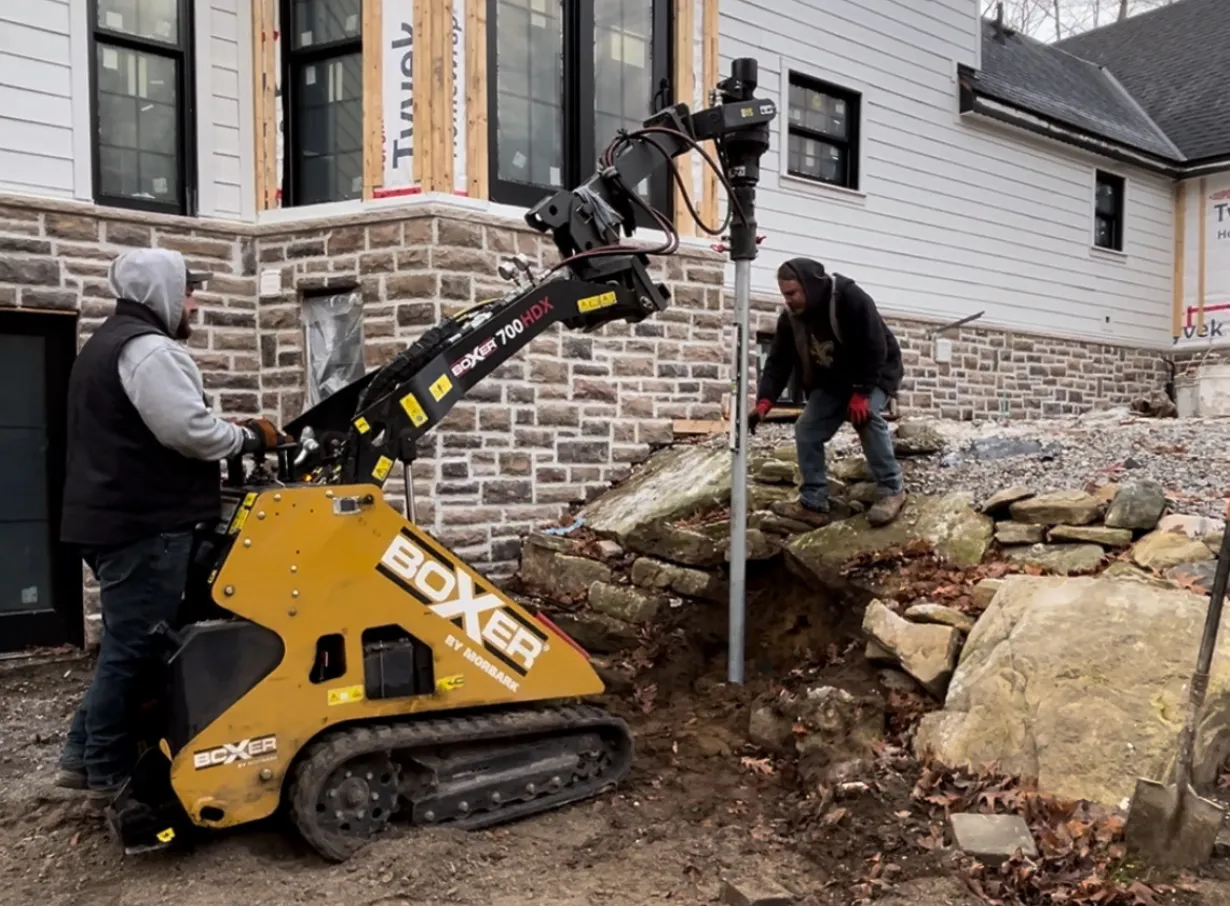
Rather than fighting against difficult ground by moving tons of earth, modern construction often relies on bypassing weak upper layers entirely. Deep foundation systems transfer the weight of a building down to dense, stable strata located far below the surface. This strategy removes the need for wide-scale excavation and eliminates heavy concrete pours altogether. Helical steel piles have grown popular across Ontario because they install quickly and behave predictably. These steel shafts feature welded helical plates that look like large screws, allowing them to turn directly into the ground using hydraulic attachments on compact equipment.
How Helical Piles Anchor Into Unstable Earth
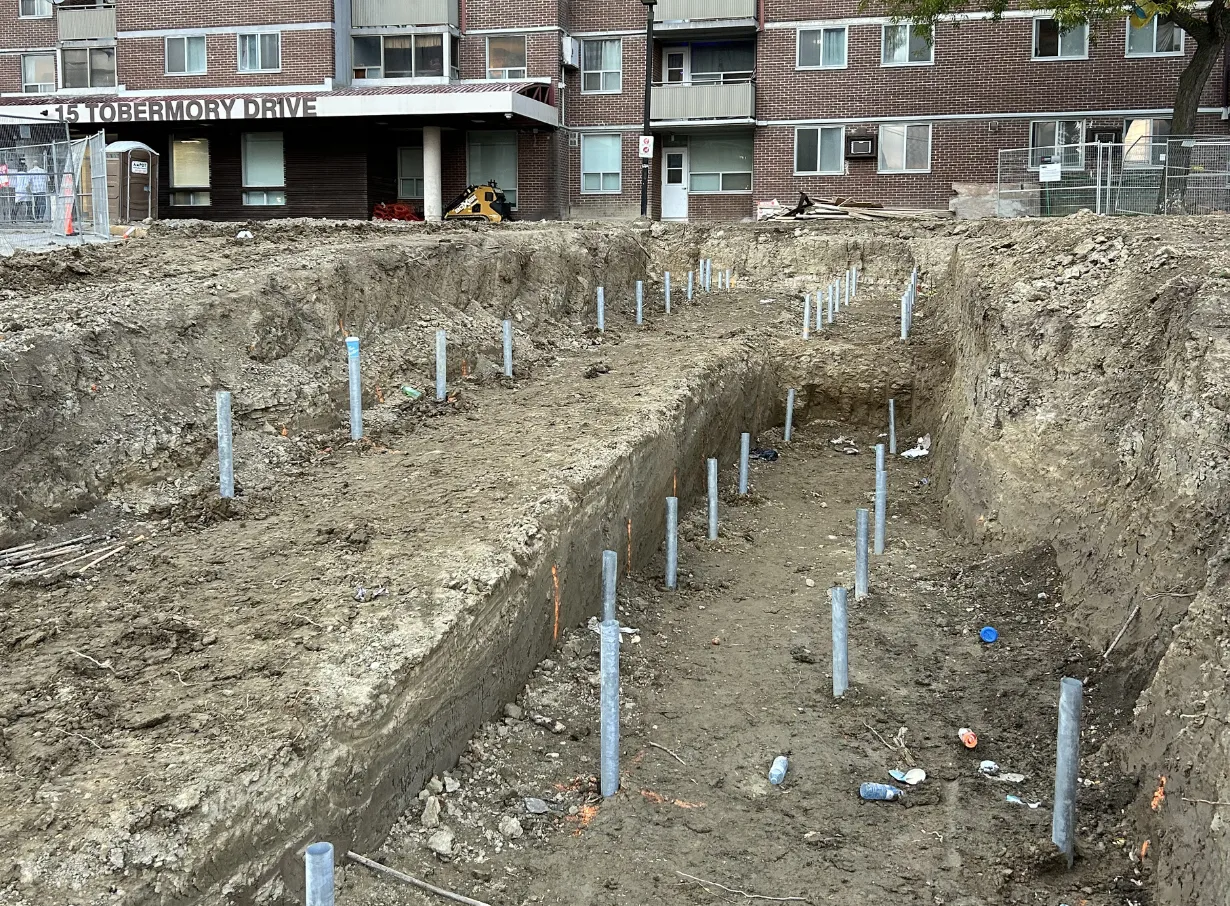
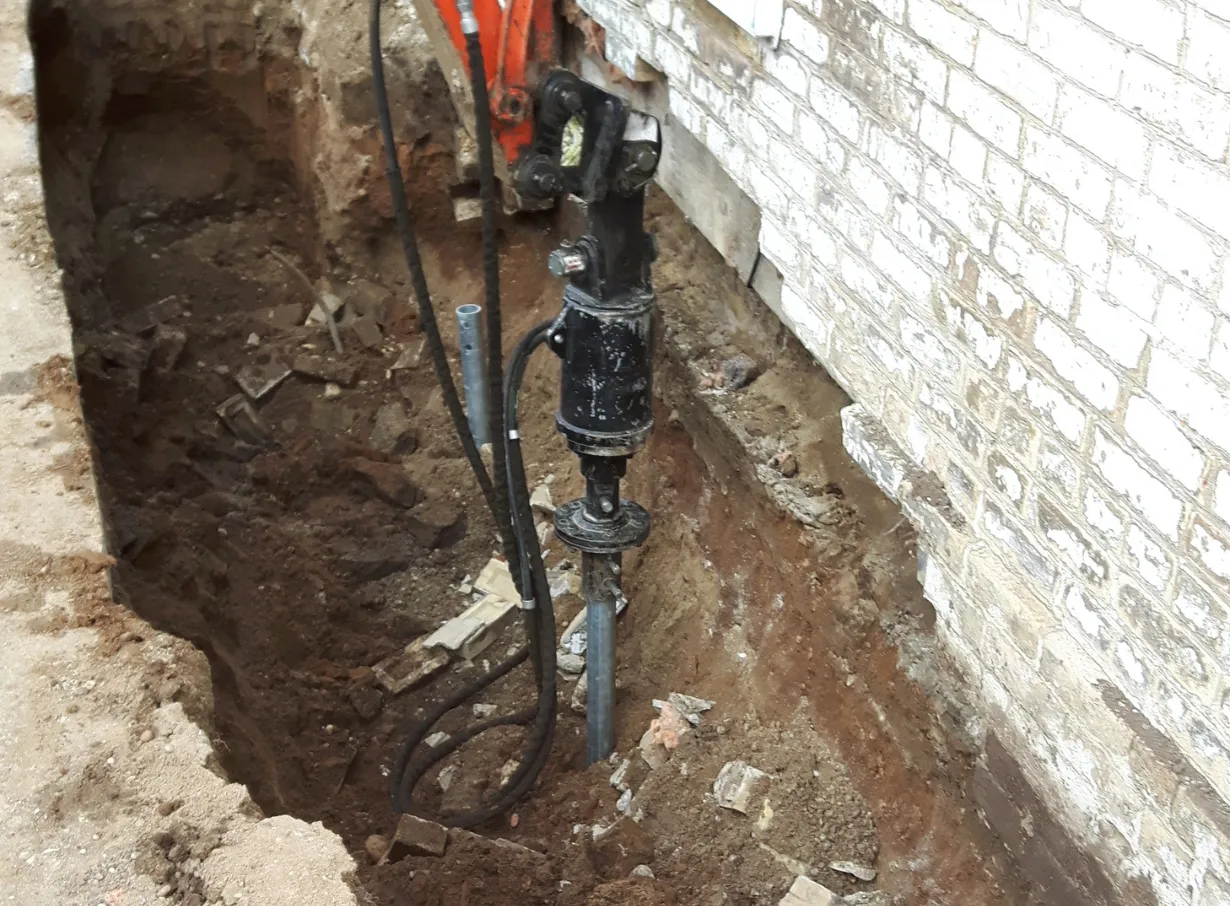
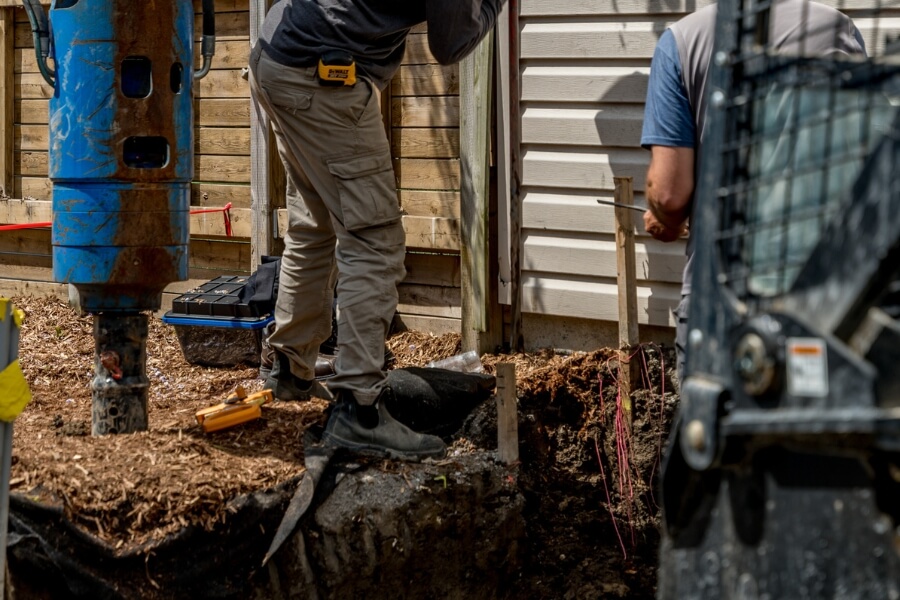
The installation process functions much like driving a giant screw into a solid piece of wood. As the pile spins, the helical blades cut cleanly through loose topsoil, silt, and soft clay without displacing the surrounding earth. We monitor the installation torque second by second, which tells us exactly when the pile hits dense, load-bearing ground. This real-time measurement provides immediate confirmation that the pier can support the intended structural weight. Once the pile reaches the specified depth and torque, workers cut the top and weld a steel bracket, making it ready for framing immediately.
- Immediate Weight Capacity: Steel piles do not require any drying time, allowing builders to start framing floors the same day.
- Cold Weather Installation: We install steel foundations throughout the winter months or during heavy spring rains without worrying about freezing weather.
- Low Impact on Landscapes: Small installation machinery fits into tight spaces, leaving mature trees, lawns, and nearby structures undisturbed.
Customizing Foundations to Specific Site Geology
Every build requires a clear understanding of what lies beneath the grass before any machinery arrives on site. A professional soil report details the exact composition, moisture levels, and depth of solid strata or bedrock. We use this information to select the correct shaft diameter and blade configuration for the specific load requirements of the project. When building on Ontario soil, using a generic approach frequently results in structural movement later. A small cabin on a rocky Muskoka waterfront requires a completely different engineering approach than a multi-story home extension sitting on clay in Brampton.
Meeting Ontario Building Code Standards
Local building departments enforce strict regulations regarding structural safety and foundation performance. The Ontario Building Code sets clear standards that every foundation must fulfill to obtain building permits and pass final inspections. Utilizing engineered helical piles simplifies this regulatory process because each pier comes with verifiable torque data proving its capacity. Municipal inspectors rely on these certified field logs, which helps avoid unexpected project delays during the approval process.
Environmental Benefits of Using Steel
Screw piles minimize the overall carbon footprint of a new building project. We do not need to dump large amounts of excavated soil into landfills or rely heavily on concrete production, which produces high greenhouse gas emissions. If a temporary structure ever needs removal, the steel piles can be spun out of the ground completely, leaving the natural environment intact without leaving buried masonry behind.
Best Practices for Building on Ontario Soil Safely
Achieving success in challenging terrain relies on thorough initial planning and utilizing the right equipment. Property owners and developers should look at the long-term performance of their foundation rather than focusing solely on upfront costs. Selecting a deep foundation system avoids future expenses tied to foundation cracking, underpinning, or structural levelling. Collaborating with experienced professionals who know regional soil types protects a building from the destructive forces of shifting clay and seasonal frost.
Common Signs of Foundation Movement
Spotting ground shifting early helps prevent severe damage to older buildings. Owners must watch for specific warning signs that indicate a foundation is settling unevenly. Windows that suddenly jam, cracks running diagonally across interior drywall, or gaps forming between an outdoor chimney and the main wall all indicate soil movement underneath. Resolving these issues early with targeted foundational repair helical underpinning stabilizes the walls before the framing warps permanently.
Securing Long-Term Stability
Our regional geography means perfect ground conditions are a rarity. Dealing with sticky southern clay or northern muskeg requires a clear plan for how the ground interacts with the structure. Bypassing weak topsoil to anchor directly into dense earth remains the most reliable method for any build. Steel helical piles offer a clean, rapid, and predictable way to overcome the natural challenges of our terrain, keeping your structure level and secure for decades ahead.

Written by
Marcus T.
Structural Foundation Writer with 15 years covering Ontario building practices
Marcus covers residential and commercial foundation systems across Ontario, with a focus on helical pile technology and deep foundation engineering. He writes for homeowners, contractors, and developers navigating foundation decisions in challenging Canadian soils.
