
1. Speed of Installation: Hours vs. Weeks
The most immediate difference is the timeline. Traditional concrete requires a multi-day process that can halt your project before it even starts.
- Concrete: Requires digging deep holes, hauling away dirt, building wooden forms, and pouring wet concrete. Then, you wait. Depending on the weather, concrete can take 7 to 28 days to fully cure before it can safely support a load.
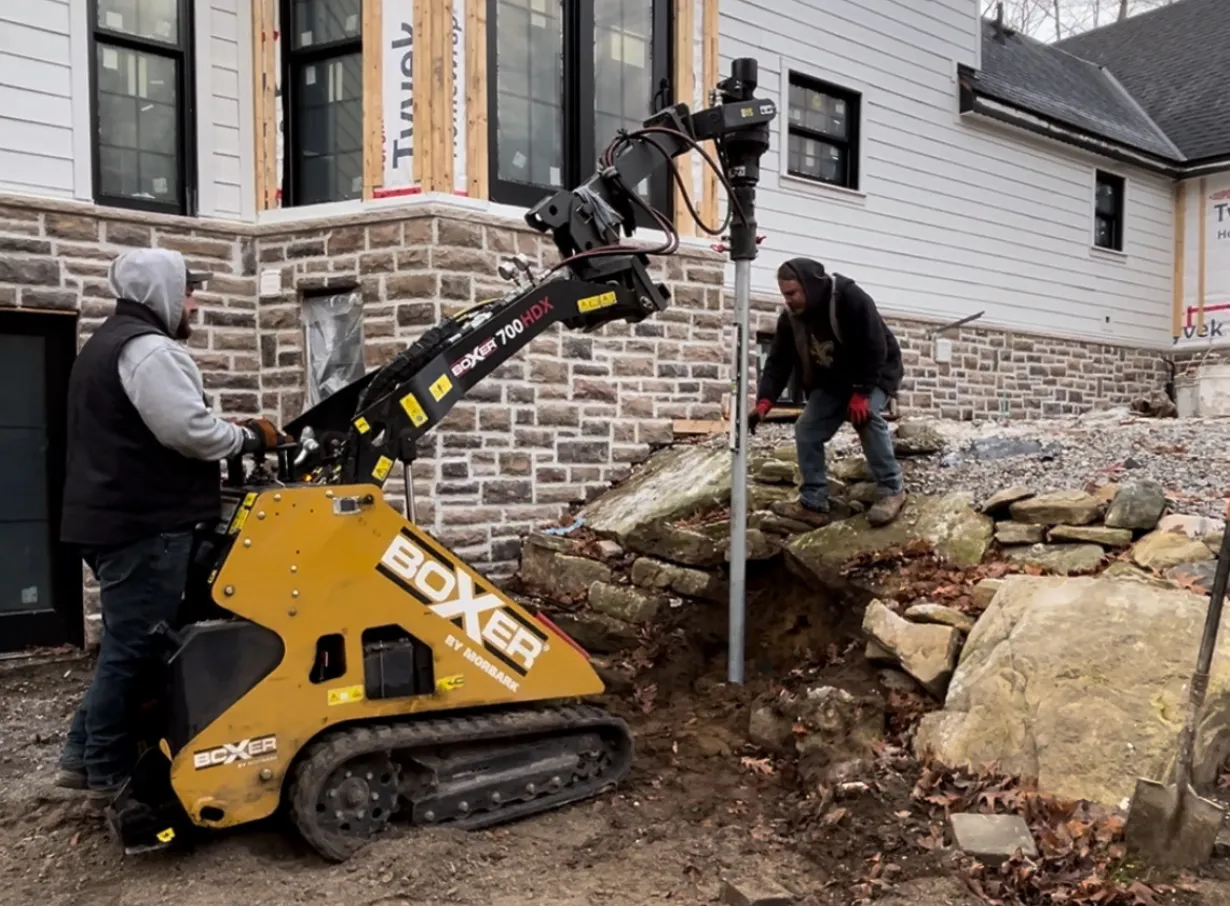
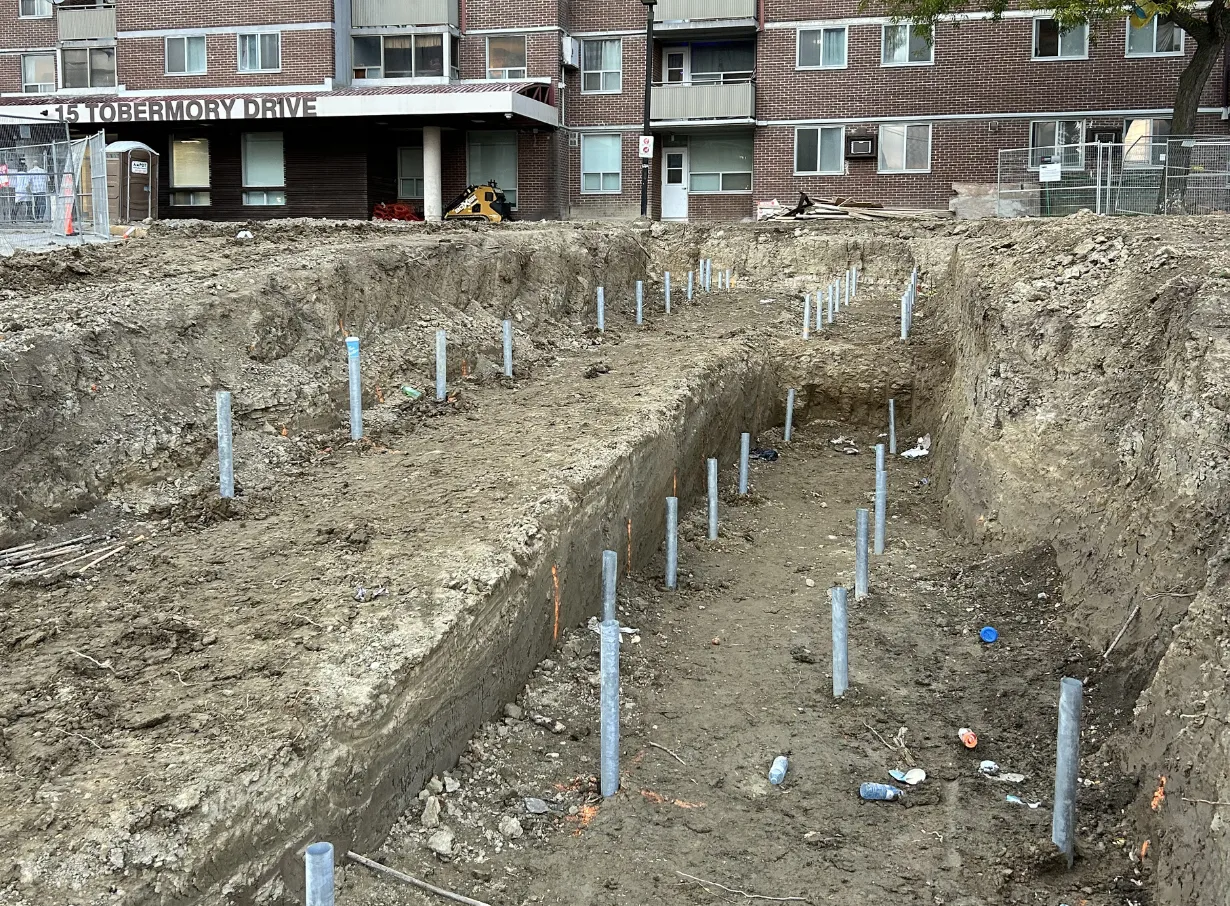
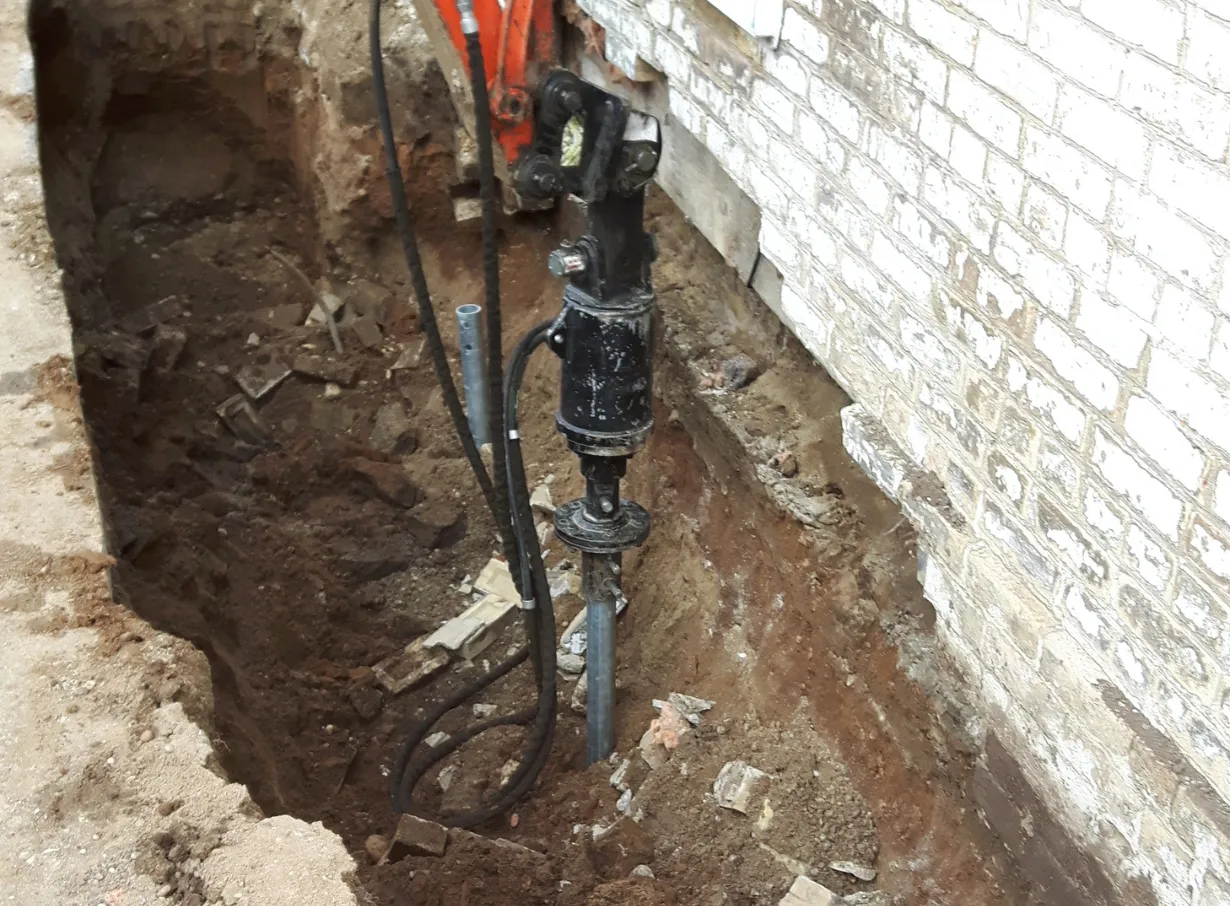
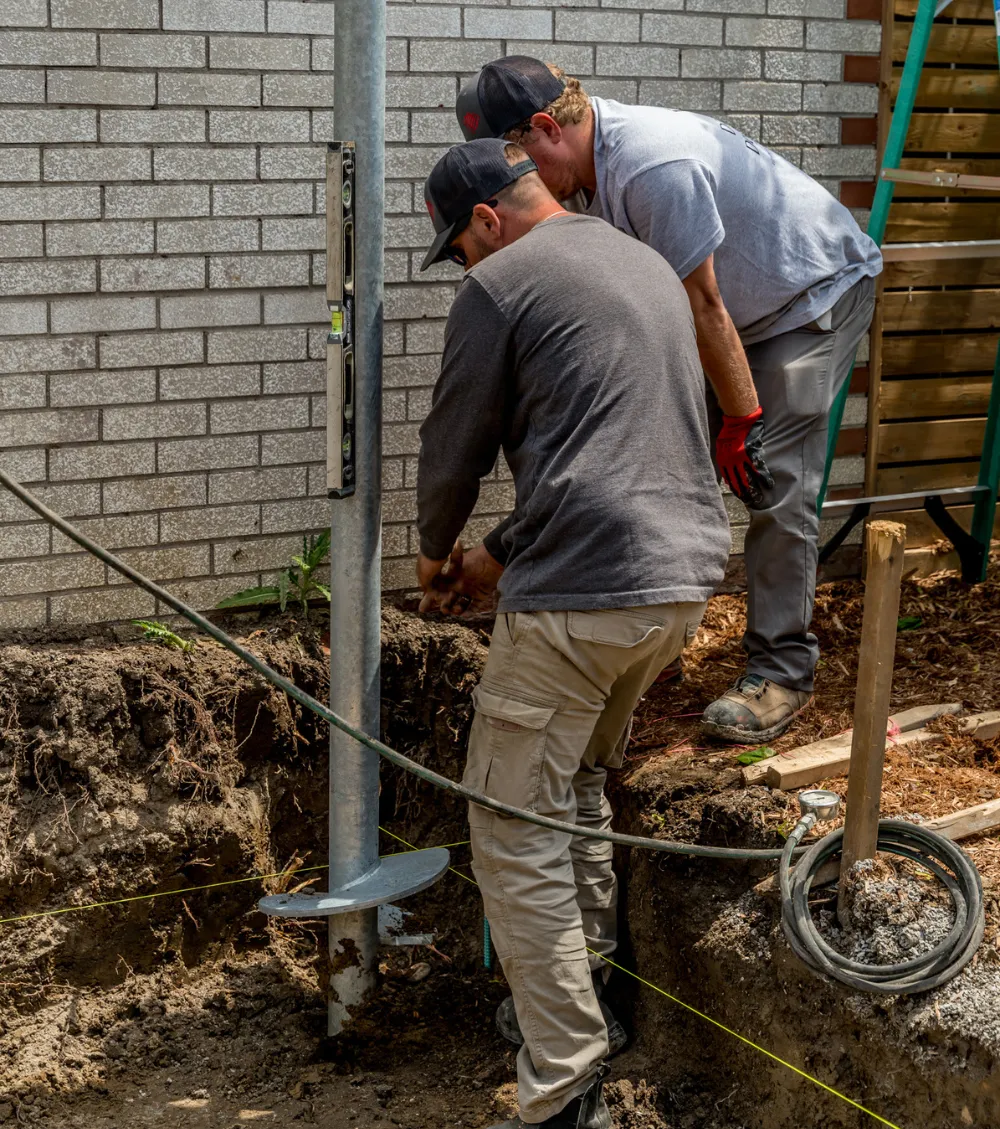
- Helical Piles: These are mechanically screwed into the ground using high-torque hydraulic equipment. There is zero curing time.
The Result: With helical piles, you can begin framing your structure the same hour the last pile is installed. On a standard residential deck, this saves you at least a week of downtime.
2. Weather & Seasonality: The Ontario Factor
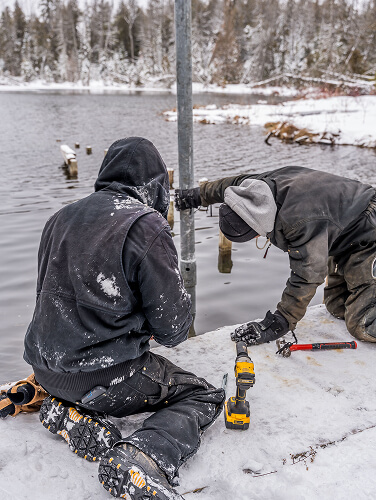
In Ontario, the “construction season” is often dictated by the thermometer. Helical piles effectively eliminate the ‘off-season’.
- Concrete: Pouring concrete in the winter is expensive and risky. You need “heated” concrete, chemical additives, and expensive hoarding (tents and heaters) to ensure it doesn’t freeze and crack.
- Helical Piles: Since there is no water involved, helical piles are weather-independent. They can be installed in -20°C or +30°C. They easily bypass the frost line to reach stable, non-frozen soil.
3. Site Impact: Protect Your Landscaping
If you value your lawn, gardens, or paved driveway, the “mess factor” of concrete is a major drawback.
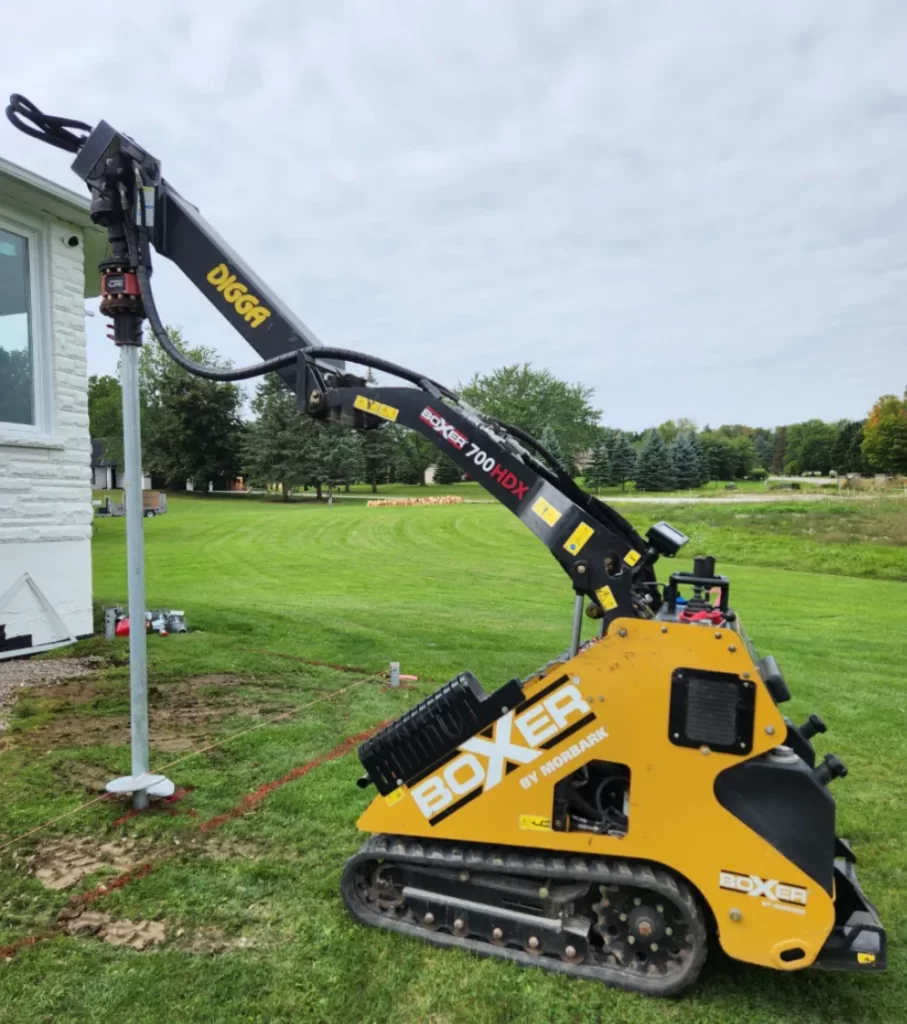
Traditional concrete footings require a mini-excavator to tear up your yard, leaving piles of dirt sitting for days. Our helical pile equipment is lightweight and uses low-PSI tracks. There is no excavation and no soil spoils to haul away. We leave your site exactly as we found it—just with a permanent foundation ready for building.
4. Engineering & Load Verification
How do you know your foundation will hold? With concrete, you trust the soil at the bottom of the hole. With helical piles, we use digital torque monitoring. Every pile is measured as it goes into the ground, providing mathematical certainty of the load-bearing capacity before we even leave the site.
5. The Real Cost of a Foundation
While a helical pile might have a higher material cost than a bag of concrete, the total project cost is usually lower. When you factor in excavation labor, dirt removal, and the “time is money” factor of starting your build weeks earlier, helical piles are the smarter investment.
