
A lot of homeowners notice their decks shifting right after the very first winter. You might see a privacy gate that suddenly won’t shut or a new, unexpected slant in the floorboards. This isn’t a mistake made by the carpentry crew. It is a direct result of the ground shifting violently underneath the structure. When freezing temperatures arrive, water trapped in the soil expands and pushes upward with immense force. We see this structural damage every single spring, and it all comes down to a process called frost heave. Understanding how this movement happens is the first step in keeping your outdoor living space from turning into a warped, expensive headache.
What Exactly is Frost Heave and Why Does It Target Decks?
When freezing temperatures arrive, the moisture trapped inside the upper layers of the soil begins to turn to ice. As water transitions into a solid state, its volume increases naturally by about nine percent. This expansion forces the surrounding soil upward because it has nowhere else to expand. This upward movement is called frost heave, and it exerts thousands of pounds of pressure on anything buried in its path. Decks are particularly vulnerable to this upward push because they are relatively lightweight compared to full-scale houses. A heavy brick home can sometimes resist minor ground shifting. But a wooden frame simply gets lifted right along with the frozen earth.
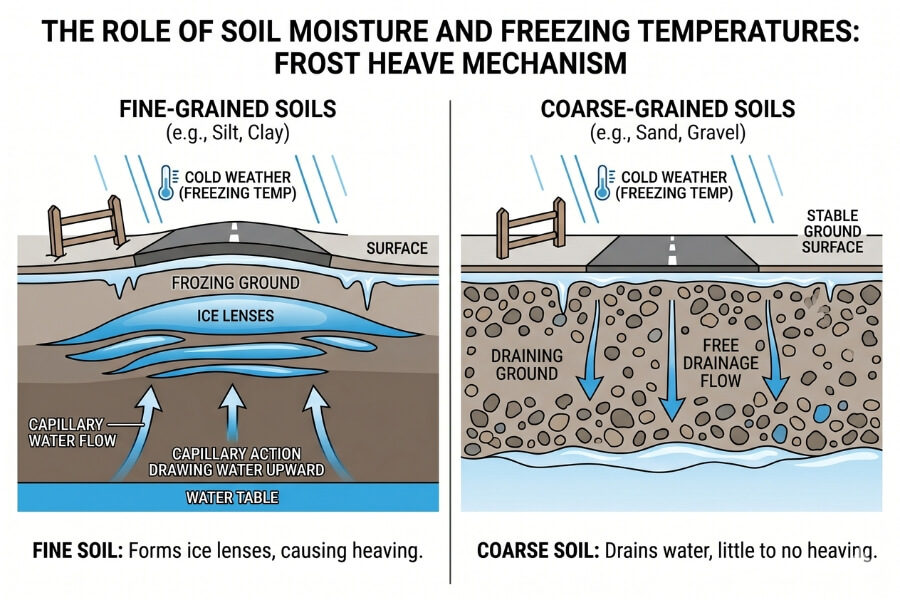
The Role of Soil Moisture and Freezing Temperatures
For this ground movement to occur, three specific elements must come together: cold weather, a continuous supply of water, and frost-susceptible soil. Fine-grained soils like silt and clay act like a sponge, drawing water upward from the water table through capillary action. When the top layer freezes, it pulls more water up from below, creating growing lenses of ice beneath the surface. This ice continues to thicken throughout the coldest months, lifting everything above it. Sand and gravel allow water to drain away freely, making them far less prone to these localized ice formations.
Why Shallow Concrete Footings Fail Under Pressure
Many traditional decks rely on precast concrete deck blocks or shallow poured piers that sit just a foot or two below the grass. While these methods are popular for quick weekend projects, they sit directly within the active freezing zone. As the upper soil expands, it grips the rough sides of the concrete block and lifts it upward. When spring arrives and the ice melts, the soil softens, and the footing settles back down. However, the ground rarely returns to its exact original position, leaving the pier permanently misaligned.
- Cumulative Damage: Each frost cycle pushes footings further out of alignment, meaning a deck grows more unstable with every passing year.
- Soil Contamination: Silt and debris wash into the gaps under a lifted footing, preventing it from ever dropping back down to its starting depth.
- Uneven Weight Distribution: When one pier rises, it forces the remaining supports to carry loads they were never engineered to handle.
The Destructive Effects of Ground Shifting on Your Deck Anatomy
A deck is a complex network of interlocking wooden components designed to distribute weight evenly across its foundations. When a single concrete footing lifts even an inch or two due to frost heave, it throws the entire structural frame out of balance. Joists begin to twist, beam connections pull apart, and structural screws can snap under the immense tension. The wood itself may begin to warp or split as it forces its way against fixed framing connectors.
The Hidden Danger to Your Home’s Structural Ledger
Most residential decks connect directly to the house frame using a thick piece of lumber called a ledger board. The house itself sits on a deep foundation that does not move during the winter. When the outer edge of the deck lifts because of frost heave, the entire frame acts as a massive lever. This upward force puts incredible leverage on the ledger board, threatening to rip the lag screws right out of the house wall. A compromised ledger board allows water to seep into the home’s rim joist, creating hidden rot issues that cost thousands of dollars to repair.
- Popping Screws or Nails: Fasteners backing out of the wood indicate the frame is twisting out of its original alignment.
- Uneven Railings: Handrails that used to be perfectly level look visibly crooked or loose after the ground thaws.
- Sticking Access Doors: Privacy gates or under-deck storage doors suddenly bind against their frames during the winter months.
Smart Foundation Choices: How to Avoid Deck Frost Heave
Fixing a twisted deck after the structural damage occurs is an incredibly difficult, expensive process. The most logical approach is learning how to avoid frost heave during the initial design phase of construction. This involves anchoring the structure into stable ground layers that remain completely unaffected by sub-zero temperatures. Choosing a deep foundation system eliminates seasonal movement entirely and protects your investment.
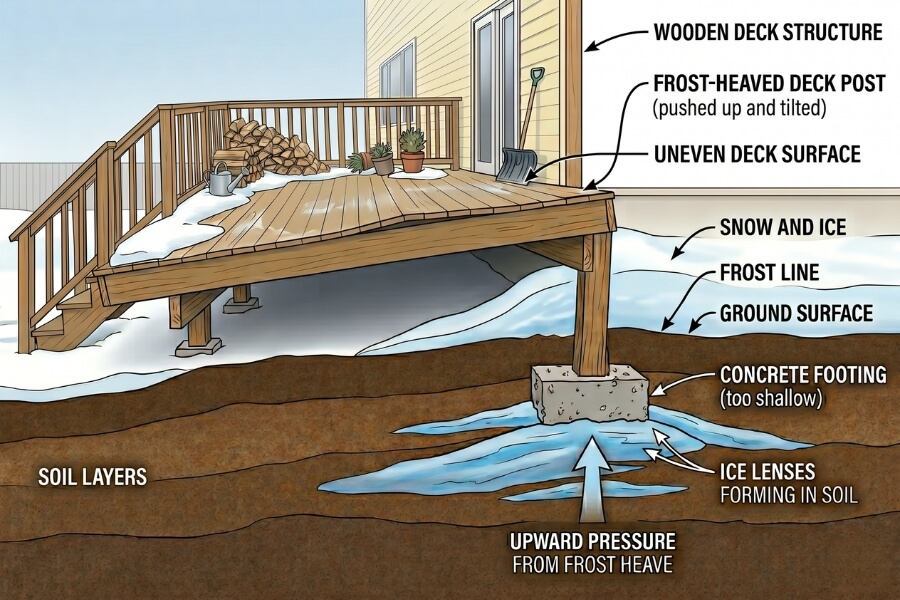
Reaching Far Past the Local Frost Line
The most critical rule of cold-weather building is getting below the frost line. In our province, winter cold penetrates deep into the earth, often reaching depths between four and six feet depending on the exact location. Traditional concrete piers must be poured exceptionally deep to escape this freezing zone. Digging these deep holes by hand is exhausting, and pouring concrete in tight cardboard tubes requires precise weather conditions to cure properly without cracking. Understanding how to avoid frost heave requires changing our approach to foundation depth.
Switching to Helical Steel Piles for Lasting Stability
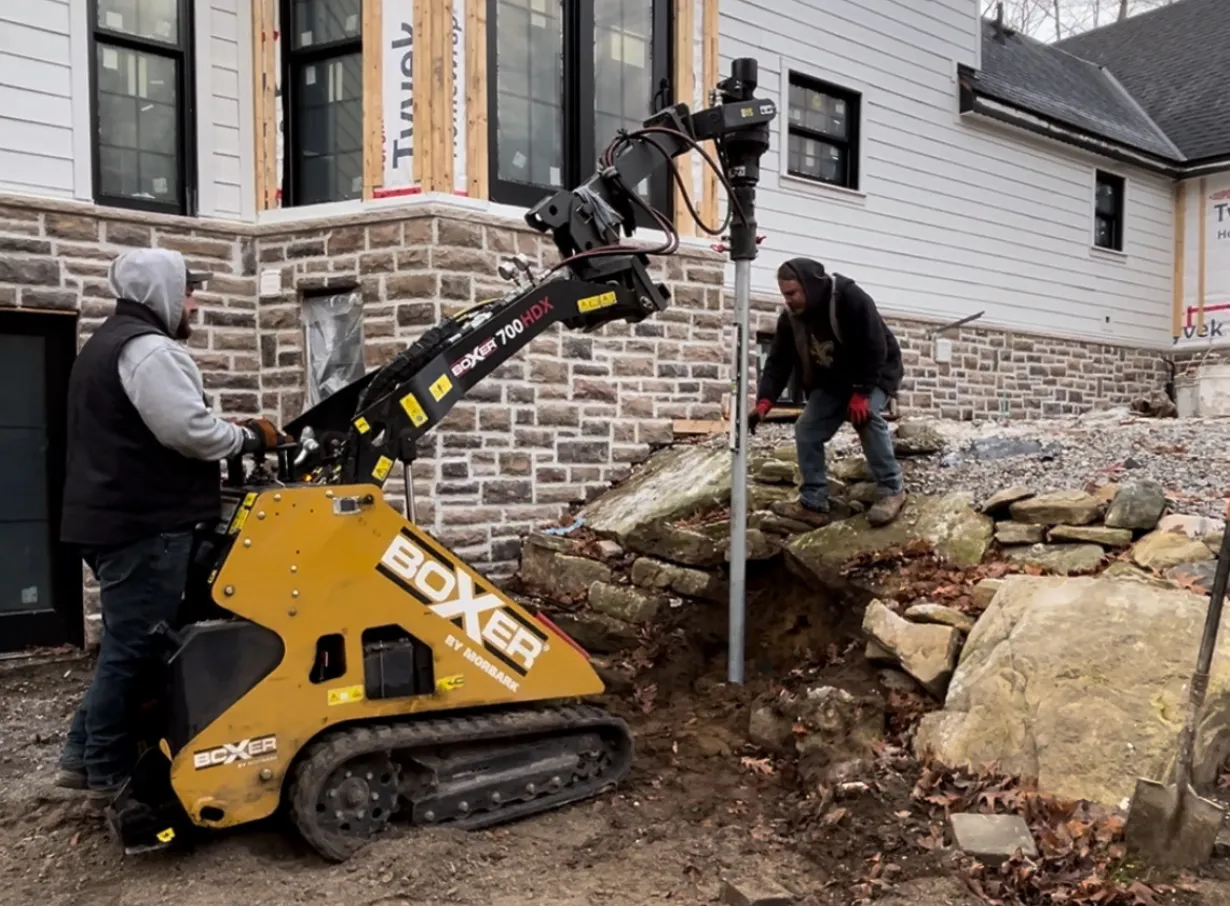
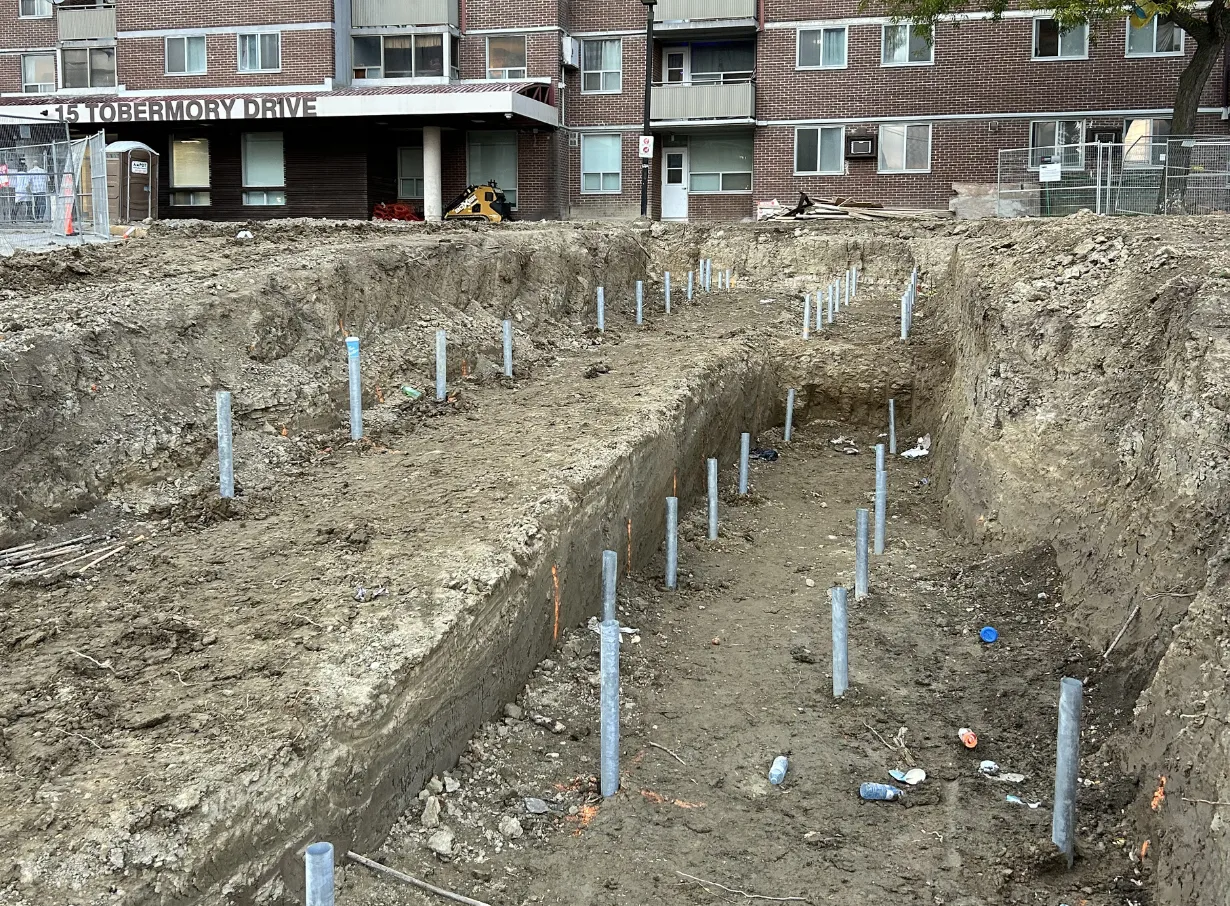
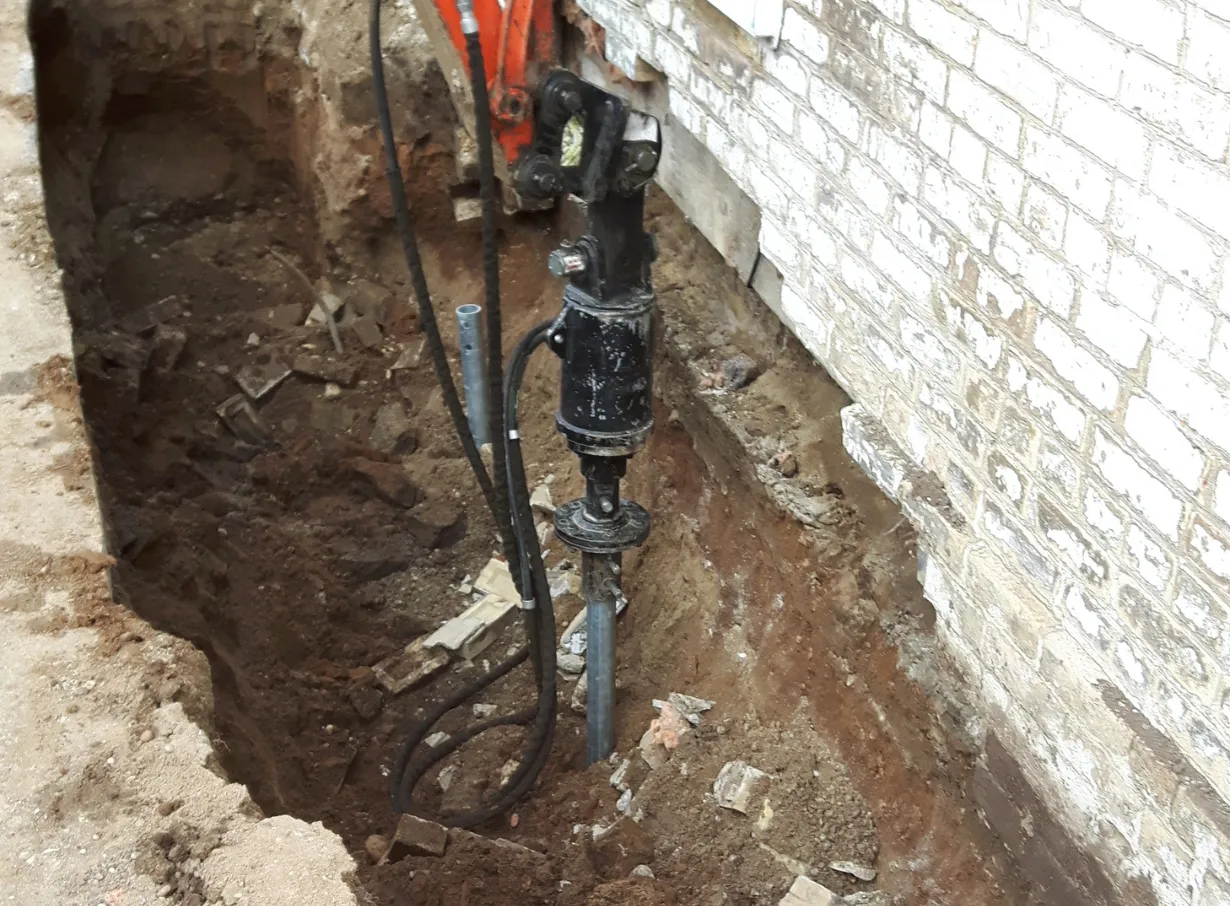
Modern engineering provides a much simpler and cleaner alternative to deep concrete digging. Helical steel piles utilize a heavy-duty steel shaft with welded screw blades that cut cleanly through the upper layers of earth. We turn these steel piers deep into the ground using specialized hydraulic equipment until they anchor into dense, undisturbed strata well below the active frost line. The smooth steel shaft prevents frozen topsoil from gripping the pile, allowing the expanding upper ground to slide harmlessly upward without disturbing the foundation.
- Zero Drying Time: Framing can begin the exact same day the steel piles are driven into position, speeding up construction timelines.
- Minimal Yard Disruption: The installation equipment avoids tearing up existing lawns, mature gardens, and landscaping features.
- Verifiable Strength: We measure installation torque in real time to confirm the exact weight capacity of every single pile.
Long-Term Protection
Building a lasting deck requires looking beyond the visible wood and focusing on what supports the entire weight of the structure. Spending a bit of extra time planning a good deck foundation prevents a cycle of endless repairs, structural shimming, and early reconstruction. Investing in proper materials shows homeowners exactly how to avoid frost heave without ongoing maintenance. By bypassing the volatile upper soil layers, your outdoor space stays level, safe, and beautiful for decades to come, no matter how severe the winter gets.

Written by
Derek V.
Commercial construction and infrastructure writer based in Ontario
Derek covers commercial construction and industrial foundation systems across Ontario. His work focuses on cost-benefit analysis, load capacity, and deep foundation solutions for developers, engineers, and property owners handling large-scale projects.
